


What Mismatched
Paint Really
Tells You.
Five paint tells that reveal a refinished panel — even when the color code is right. Metamerism, tri-coat shift, the blend line, metallic flake direction, and the age gap. Sunglasses off, phone flashlight on.
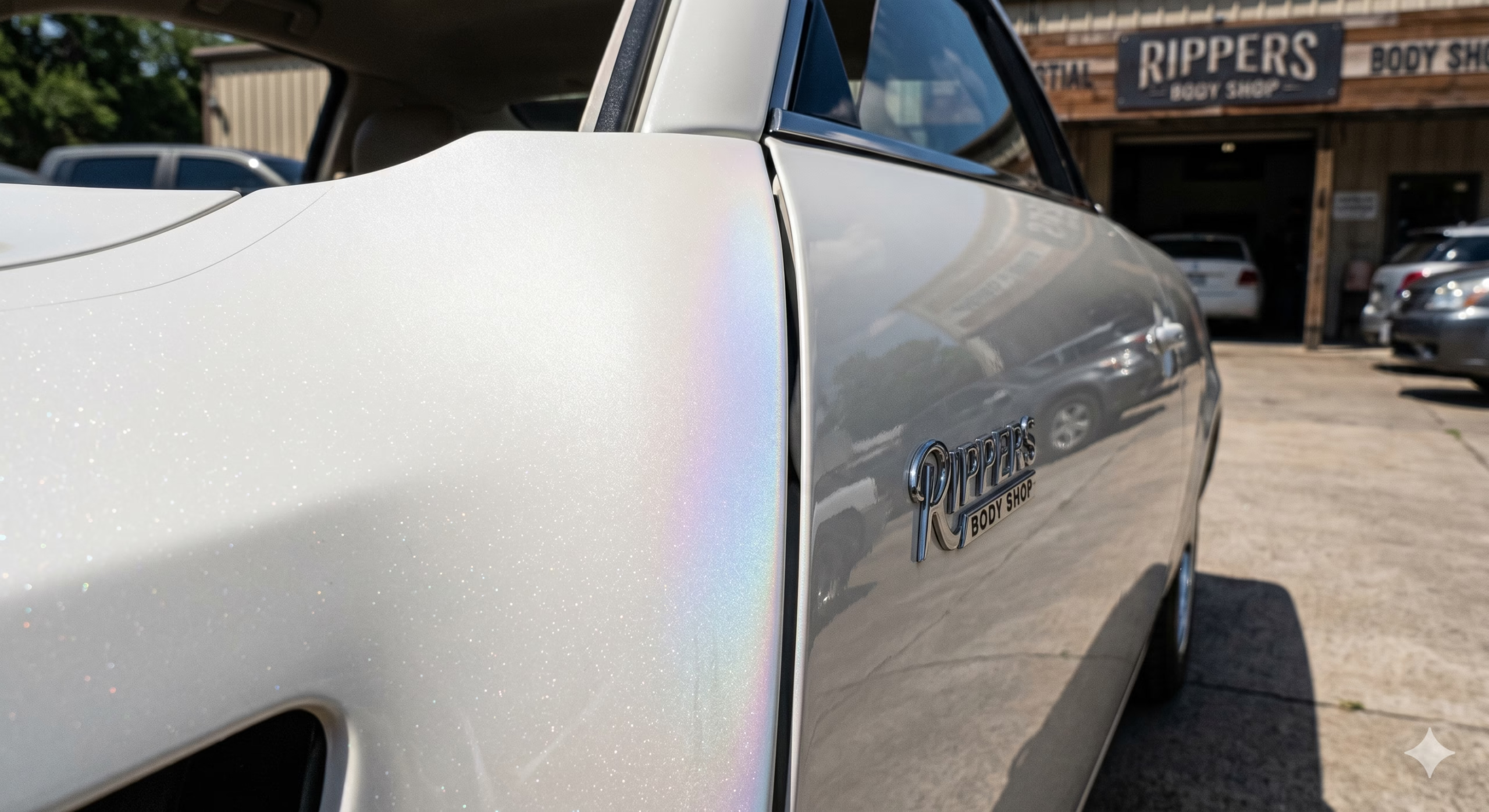
A paint job can look perfect in the shop and obviously wrong the moment it hits the parking lot.
That's not a trick of the eye. It's a real, predictable physical phenomenon, and it's the reason mismatched paint is the most common — and most overlooked — sign of past body work on a used car. Two colors that appear identical under the fluorescent lights of a sales floor can look strikingly different under direct sunlight, under shade, or under your phone flashlight at a low angle. Once you know why that happens, the tells become very hard to miss.
Episode 1 of this series covered the five-minute walkaround — paint texture, panel gaps, bolt heads, overspray, and witness marks. This one zooms in on color. Five specific paint tells that reveal a refinish even when the painter did everything right with the color code. Each takes under a minute to check, and they stack: any single tell can be debatable, but two or three together is a story. Read Episode 1 first ↗
Does the color hold in every light?

This is the single most important concept in used-car paint inspection. Two paints that share the exact same factory color code can be formulated with different pigments and still look identical under one light source while clearly mismatching under another. Refinish paint from a body shop and original factory paint are almost always formulated differently — same code, different pigment chemistry. Under the shop's warm fluorescent lighting, both panels reflect a similar spectrum. Outside, in broad-spectrum sunlight, the difference suddenly shows up.
Metamerism is the phenomenon where two colors appear to match under one light source and noticeably differ under another. It's why a paint job that passes inspection in the shop can fail it in the customer's driveway.
How to check (≈90 seconds)
- Take your sunglasses off. Polarized lenses cut glare but also hide subtle color differences.
- Look at every panel of the car under direct sunlight. Walk a full lap.
- Move the car (or yourself) into open shade and look again. Some metamerism only shows under indirect light.
- Pull out your phone, turn the flashlight on, and shine it at a low angle across the seam between two panels. New light source, new chance for a hidden mismatch to surface.
A panel that mismatches under different light sources is almost certainly a refinish. The painter matched the color code; the chemistry didn't match the original. It's not a defect — it's a fingerprint.
Does the color shift the same way as you walk past?

Tri-coat and pearl paints are the trickiest finishes to match. Common examples on Sacramento lots include Toyota's Blizzard Pearl, Honda's Pearl White, Hyundai's Quartz White Pearl, and the various BMW Alpine Whites. These paints have three layers: a solid ground coat, a translucent mid-coat containing pearl pigment flakes, and a clear coat on top. The pearl flakes in the mid-coat orient themselves in the wet paint film based on spray-gun angle, distance, pressure, and panel position. Even with the identical color code, a mid-coat applied differently in a body shop will refract light at a slightly different angle than the factory version — and that shows up as you walk around the car.
How to check (≈60 seconds)
- Stand 6 feet from the car, perpendicular to a panel. Note the color.
- Walk slowly along the side of the car, eyes on the same panel. The color should shift smoothly and consistently — same shift from fender to door to quarter.
- If one panel "pops" or "dulls" out of sequence as you walk past, it doesn't match the rest of the car's pearl orientation.
- Do this on both sides. Asymmetric shift between left and right is a strong tell.
Pearl colors are three-dimensional. A factory mismatch on a tri-coat usually means the repair was done in a budget shop or under time pressure — the kind of work that often hides other compromises underneath.
Where does the new paint stop?

When a body shop repaints a bumper, fender, or door, they almost always "blend" the new paint into the adjacent panels — feathering the spray outward so the eye can't see a hard edge between new and old. This is good practice, not bad practice. A well-blended repair is invisible. But a poorly blended one leaves a soft transition you can find with a low-angle light. This is the famous "fender vs. door" tell: the painter repaired the door, blended into the fender, and the blend line shows up mid-fender as a faint shimmer change.
How to check (≈90 seconds)
- Walk around the car looking at the long horizontal surfaces (sides, hood, trunk) from a low angle, sun behind you.
- Look for a faint shimmer change running across the middle of a panel — usually near a body crease where the painter feathered the spray off.
- Use your phone flashlight at a low angle on shaded panels. Blend lines often pop under flashlight that vanish in ambient light.
- If a fender or door has a visible blend line, the panel past it (in the direction of the blend) is the one that was actually repaired.
A visible blend line tells you two things at once: (1) yes, the car had body work, and (2) the painter blended outward to hide the seam, which means the repaired panel is on the other side of the blend.
Do the flakes catch the light the same way?

Metallic paint contains tiny aluminum or mica flakes — usually 5 to 50 microns across — that suspend in the paint film and reflect light like a million little mirrors. The way those flakes orient themselves in the wet paint depends on spray-gun pressure, distance, paint viscosity, ambient temperature, and humidity. Two panels painted with the identical color code but under different conditions will have slightly different flake orientation. The eye doesn't notice the flakes themselves; it notices that one panel "sparkles" differently than its neighbor at the same viewing angle.
How to check (≈60 seconds)
- In direct sunlight, crouch low and look across the car along a body crease or a wide panel.
- Watch how the metallic flakes catch the sun. The "sparkle pattern" should be uniform from panel to panel.
- If one panel looks duller, brighter, or more "splotchy" than its neighbors at the same angle — the flakes are oriented differently in that panel's clear coat.
- Repeat at a higher viewing angle. Some flake mismatches only show at one specific angle.
Metallic mismatch is the tell that distinguishes a quick respray from a true factory repair. Factory metallic application is consistent because robots and stable booth conditions do it. Hand-sprayed metallic in a body shop, however skilled, is harder to make identical.
Is one panel fresher than the rest of the car?
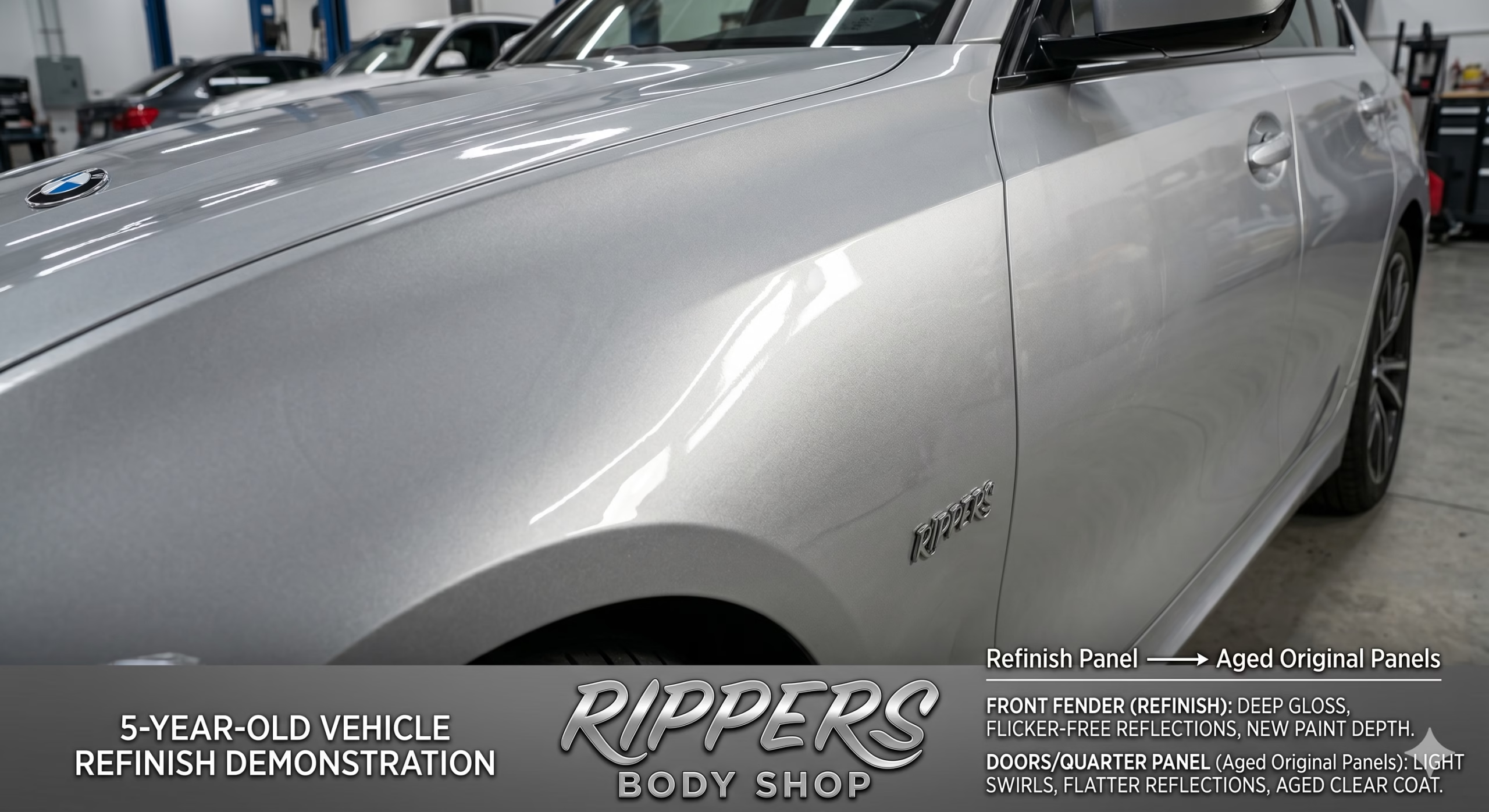
Even with a perfect color code, perfect chemistry, and perfect flake orientation, time will betray a refinished panel. Factory paint fades. UV exposure breaks down pigments and clear coats gradually — a five-year-old car has paint that's measurably duller and slightly less saturated than the day it left the assembly line. A panel repainted last year is fresher: deeper color saturation, glossier clear coat, less micro-oxidation. The mismatch is subtle, but in direct sunlight on a uniform color it's usually visible to a careful eye.
How to check (≈60 seconds)
- In direct sunlight, look at the car from about 15 feet away. Squint slightly to flatten the contrast.
- Does one panel look "wetter" or more saturated than the rest? Look especially at hoods, fenders, bumpers, and trunk lids — the most commonly repainted panels.
- Run your hand lightly across panel surfaces. Aged factory paint feels slightly drier and rougher under fingertips than recently polished paint.
- If the car is more than 3 years old and one panel looks brand-new, it almost certainly is.
This tell is the one that doesn't need any technical knowledge to spot. It's the "something looks off" feeling you get walking up to a car — and it's almost always right. Trust it.
You found a paint tell. Three questions to ask next.
Paint mismatch on a used car is information, not a verdict. A repainted bumper after a parking-lot scrape is a different story than a repainted fender hiding frame damage. The next conversation goes:
- Which panel was painted, and why? A bumper or fender from a low-speed scuff is one story; a hood, roof, or full quarter panel is another. Ask the seller. Their answer — and how confident it sounds — tells you a lot.
- Is there any sign the repair extended past cosmetics? Walk back through Episode 1's checklist for that specific panel: gaps, bolts, overspray, witness marks. If only the paint tells fire, it was likely cosmetic. If multiple signs stack up, the repair went deeper.
- Does the asking price reflect the history? A car with a documented, professionally repainted panel should be priced 5–15% under a comparable, never-touched example. If it isn't, you've found your negotiating point.
If you can't get clear answers — or the repair appears to extend past one panel — a pre-purchase inspection with paint thickness measurements removes the guesswork. We measure clear-coat thickness in dozens of spots with a paint depth gauge; a refinished panel typically reads 1.5× to 3× the thickness of factory paint. The gauge doesn't lie.
Paint depth gauges don't have opinions.
A Rippers pre-purchase inspection includes paint thickness measurements at every major panel, side by side, in writing. Factory paint typically reads between 4 and 7 mils (thousandths of an inch). Refinish paint reads higher — often noticeably so. The report tells you exactly which panels were repainted, even when your eyes can't.
Book a Pre-Purchase Inspection or call (916) 372-5353Continue Spotting a Bad Repair.
- Episode 01
5 Signs Your "Like New" Used Car Was in a Crash
Read Episode 1 → - Episode 02 · You are here
What Mismatched Paint Really Tells You
- Episode 03 · Up next
The Frame Tells the Truth
Read Episode 3 → - Episode 04
When to Pay for a Pre-Purchase Inspection
Read Episode 4 →
Quick answers, in one sentence each.
What is paint metamerism?
Metamerism is the phenomenon where two colors appear to match under one light source and clearly differ under another. It happens because the two paints use different pigments that reflect different parts of the visible spectrum. It's the single most common reason a used-car paint job that looks fine on the lot looks wrong in your driveway.
Why is tri-coat or pearl paint so hard to match?
Tri-coat paints have three layers — a ground coat, a pearl mid-coat, and a clear coat — and the pearl mid-coat creates color shifts that depend on spray-gun angle, distance, and panel orientation. Even with the same factory color code, a body shop's application of the mid-coat will refract light slightly differently than the factory's robotic application, especially on common pearl whites and metallic pearls.
Can you tell from a photo whether a car was repainted?
Sometimes, but it's unreliable. Most paint tells require direct light from a specific angle, which a stock listing photo rarely captures. Phone cameras also auto-balance color, hiding subtle mismatches. An in-person inspection — with sunglasses off, in direct sunlight — catches what photos miss.
How long does factory paint last on a car?
Modern factory paint typically lasts 10–15 years before showing visible UV fade or clear-coat failure, given normal exposure. Cars kept garaged or under cover last longer; cars parked in direct California sun without protection can show measurable fade in 5–7 years. This is why a panel that looks "fresher" than the rest of an older car is usually a refinish.
Should I worry if a used car had paint work done?
Not automatically — but the price should reflect it, and you should know what was repaired. A documented, professionally refinished bumper or fender from a minor incident is usually a 5–15% discount versus a never-touched comparable. Hidden refinish work covering structural damage is a different conversation, and is what the rest of this series helps you identify.
CA BAR Automotive Repair Dealer Reg. [ARD #XXXXXX]
This article is educational and reflects general visual inspection practices used by our technicians. It is not a substitute for a professional pre-purchase inspection. Read the rest of the series and the May 2026 newsletter for more.