


The Frame
Tells the Truth.
Five places structural damage hides on a used car — and how to read them in under ten minutes. Strut towers, frame rails, pinch welds, radiator support, and the trunk floor. These are the things a Carfax report will never show you.
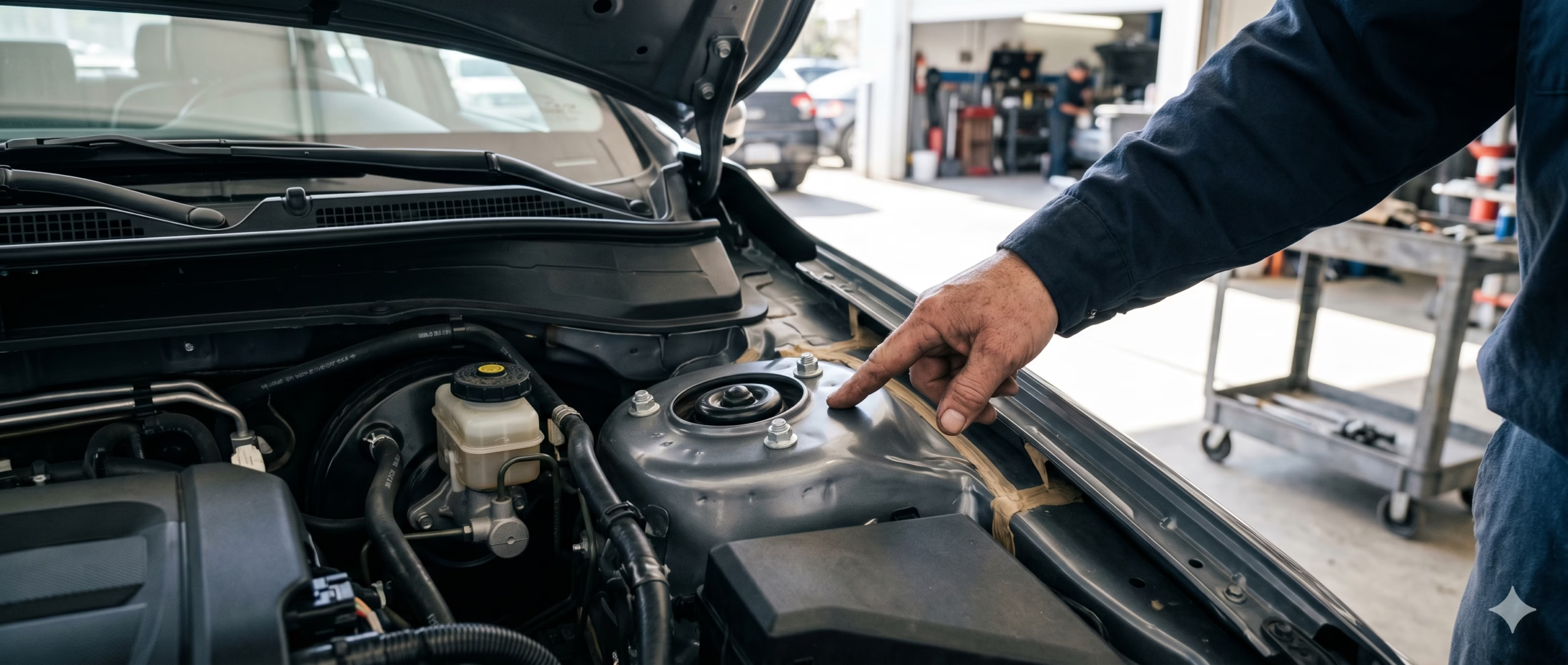
Cosmetic damage is paint. Structural damage is everything else.
A perfectly painted, perfectly aligned, perfectly Carfax-clean used car can still have a kinked frame rail or a wrinkled strut tower hiding under the sheet metal. That's the kind of damage that changes how a car crashes, how it drives, and how much it's worth — and it's also the kind of damage that's hardest to spot from outside. The good news is that most modern structural damage leaves predictable signatures in five specific places. The bad news is that most buyers never check any of them.
Episode 1 of this series covered the five-minute walkaround. Episode 2 zoomed in on paint. This one goes under the sheet metal — where the actual structure lives. You can do most of these checks yourself with a phone flashlight, ten minutes, and a willingness to crouch down. The ones you can't, a pre-purchase inspection covers in detail. Start with Episode 1 ↗
Open the hood. Look at where the suspension meets the body.
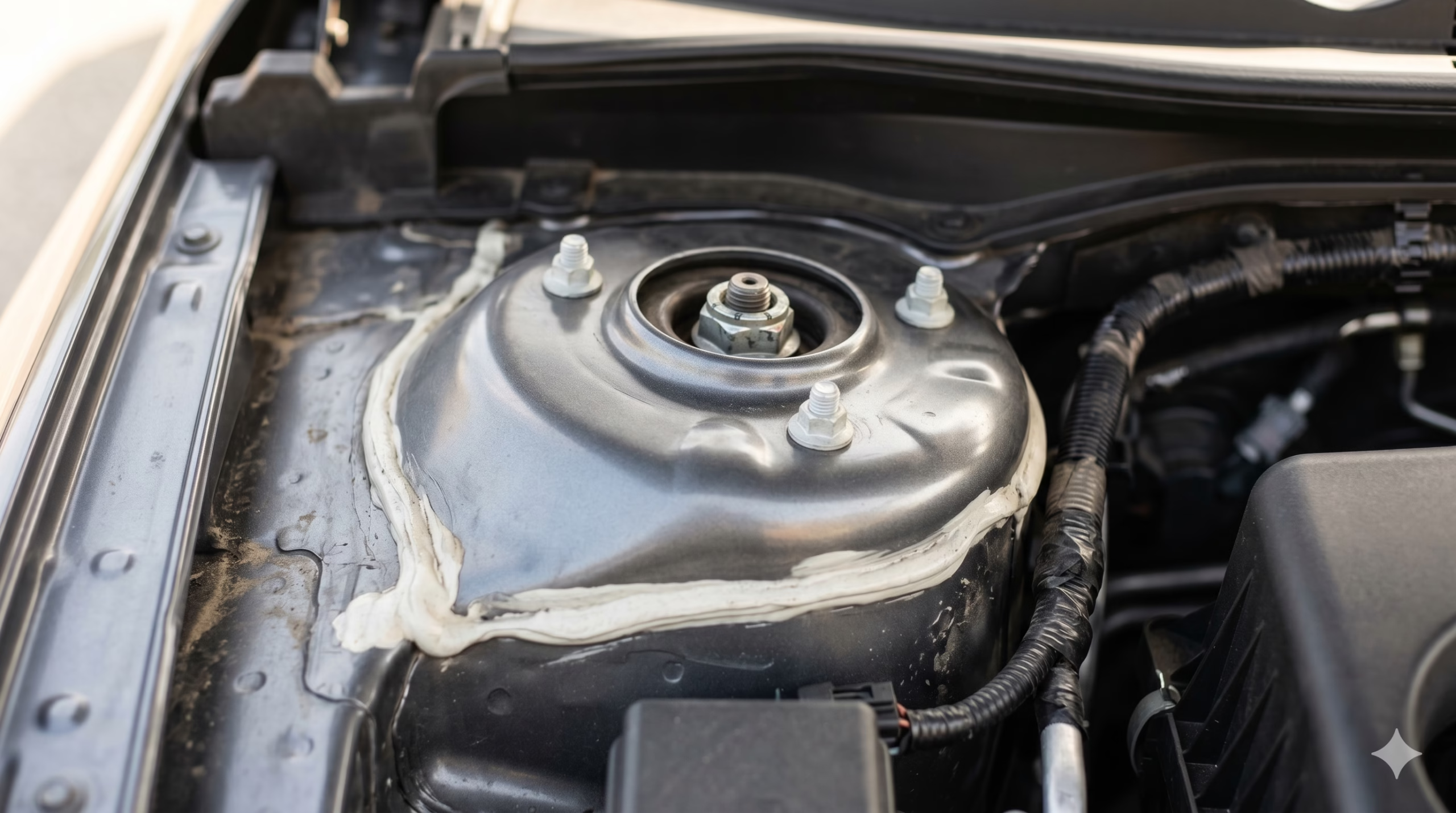
Strut towers are the two large dome-shaped structures on either side of the engine bay, near the windshield. They're where the top of each front strut bolts into the unibody — meaning every bump, pothole, and impact the front of the car has ever absorbed transfers through them. Because they're stamped steel structural members, they don't dent — they wrinkle, crease, or kink. Even small front-end collisions often leave a signature here that the bumper cover hides.
Smooth, gently curved surface. Consistent factory paint with no overspray. Bolts torqued with factory paint intact (see Ep. 1, Sign 03). Seam sealer is uniform and matches the rest of the engine bay.
A visible wrinkle, crease, or "bunched" area in the stamped metal. Fresh, brighter paint than the surrounding bay. Excess seam sealer or sealer that looks added rather than factory. New-looking bolts.
How to check (≈2 minutes)
- Open the hood and stand at the front of the car. Look at both strut towers side by side.
- Compare the left tower to the right tower. They should be mirror images — same shape, same paint, same seam sealer.
- Run your fingertips lightly across the dome of each tower, feeling for any ridge, dent, or surface irregularity that isn't on the other side.
- Use your phone flashlight at a low angle to reveal wrinkles that ambient light hides.
A wrinkled strut tower can affect wheel alignment in ways no shop can fully correct. Cars with prior strut tower damage often eat front tires unevenly, pull slightly on the highway, or feel "off" through the steering wheel — even years after repair.
Look down the front frame rails. They should be straight as rulers.
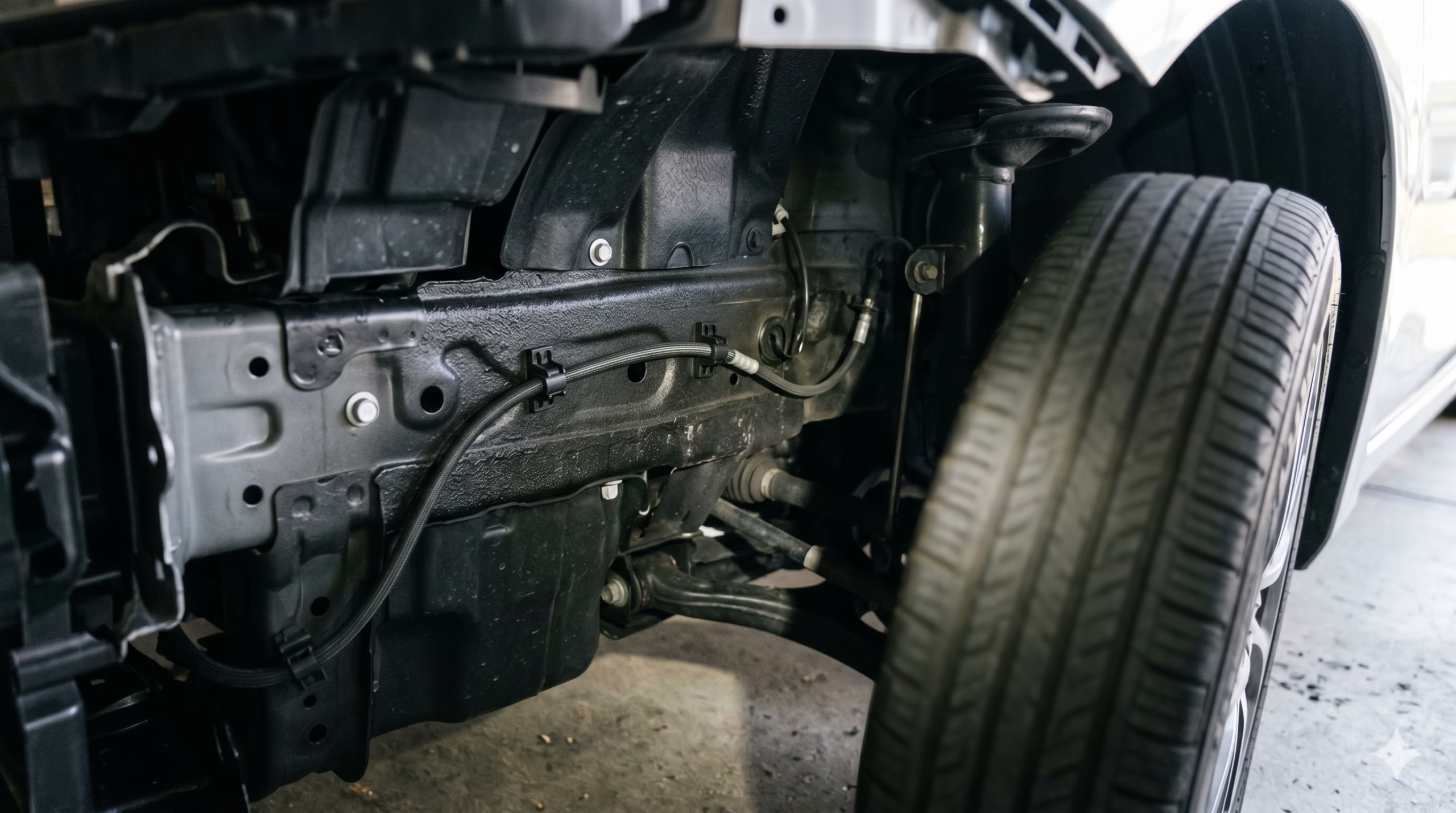
Frame rails are the two longitudinal steel beams that run from the front bumper back into the unibody — the primary crumple-zone components designed to absorb front impact energy. They're engineered to deform in a collision and then be replaced, not straightened. A rail that's been straightened instead of replaced is a strong indicator the shop took a shortcut, and the consequences can show up in steering pull, crash performance, and resale value.
How to check (≈2 minutes)
- Crouch at the front of the car. Look directly down each frame rail from the front bumper back into the engine bay.
- Each rail should appear perfectly straight from your viewpoint — no S-curves, kinks, or bowing.
- Turn the front wheels fully one way, then crouch at the front wheel well with a flashlight. Look at the inner side of the rail. Factory paint and undercoating should be continuous, with no patch repairs, fresh weld beads, or color mismatches.
- Repeat with wheels turned the other way for the opposite rail.
Straight rail. Continuous factory paint and undercoating. Consistent surface texture. Original spot-weld pattern (small round dimples at regular intervals).
Visible bend, S-curve, or kink. Patch sections where factory color stops and shop paint starts. A continuous MIG weld bead where there should be spot welds. Sloppy or excessive undercoating used to hide repair work.
Frame rails are the primary load path in a front collision. A repaired-but-not-replaced rail may not crush correctly in a future impact — meaning a car that handled its first crash safely might not handle its second one the same way.
Run your finger along the bottom edge of the doors.
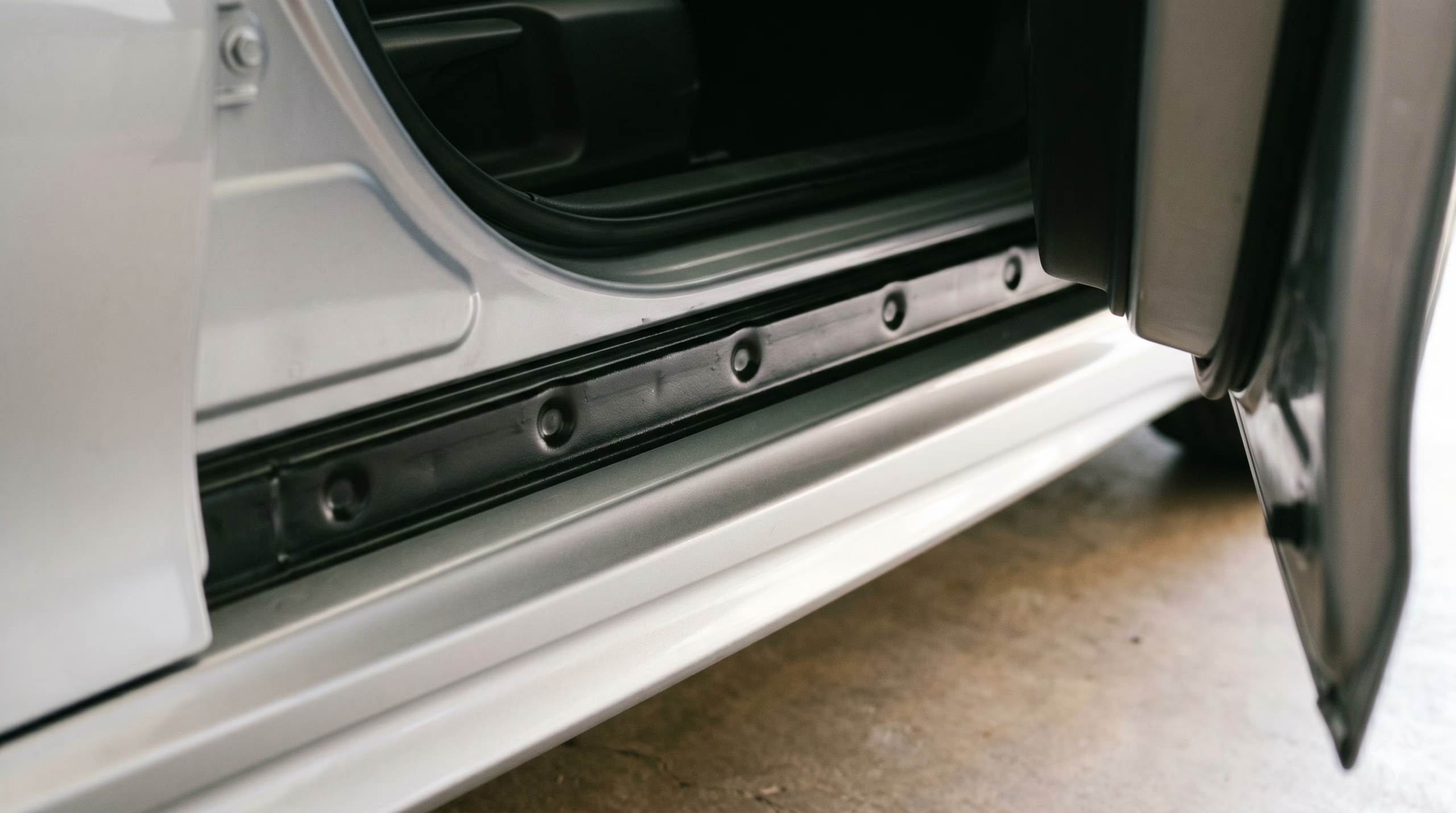
The pinch weld is the seam where the rocker panel (the structural beam beneath the doors) meets the floor pan. It runs the entire length of the car, just under the door opening. Body shops use this flange to clamp the car to a frame straightener — the big hydraulic machines that pull bent structure back into spec. Pinch welds that have been clamped show distinctive damage: pinched-flat sections, paint chipping in a line, or repair sealant applied to hide it.
How to check (≈90 seconds)
- Open the driver's door. Crouch and look at the flange that runs along the bottom edge of the door opening on the body (not on the door itself).
- Run your finger along the entire length of the pinch weld. It should feel straight and consistent — no flat-pinched sections, no obvious distortion.
- Look for paint chips arranged in a regular line pattern — this is a sign a frame-machine clamp grabbed the flange.
- Check both sides of the car, front and rear pinch welds. All four should match.
A pinched or repaired pinch weld doesn't necessarily mean the car can't be safe — but it does mean the car was hooked to a frame machine at some point, which means structural repair work happened. That should be disclosed and priced into the sale.
Inspect the assembly behind the front bumper.
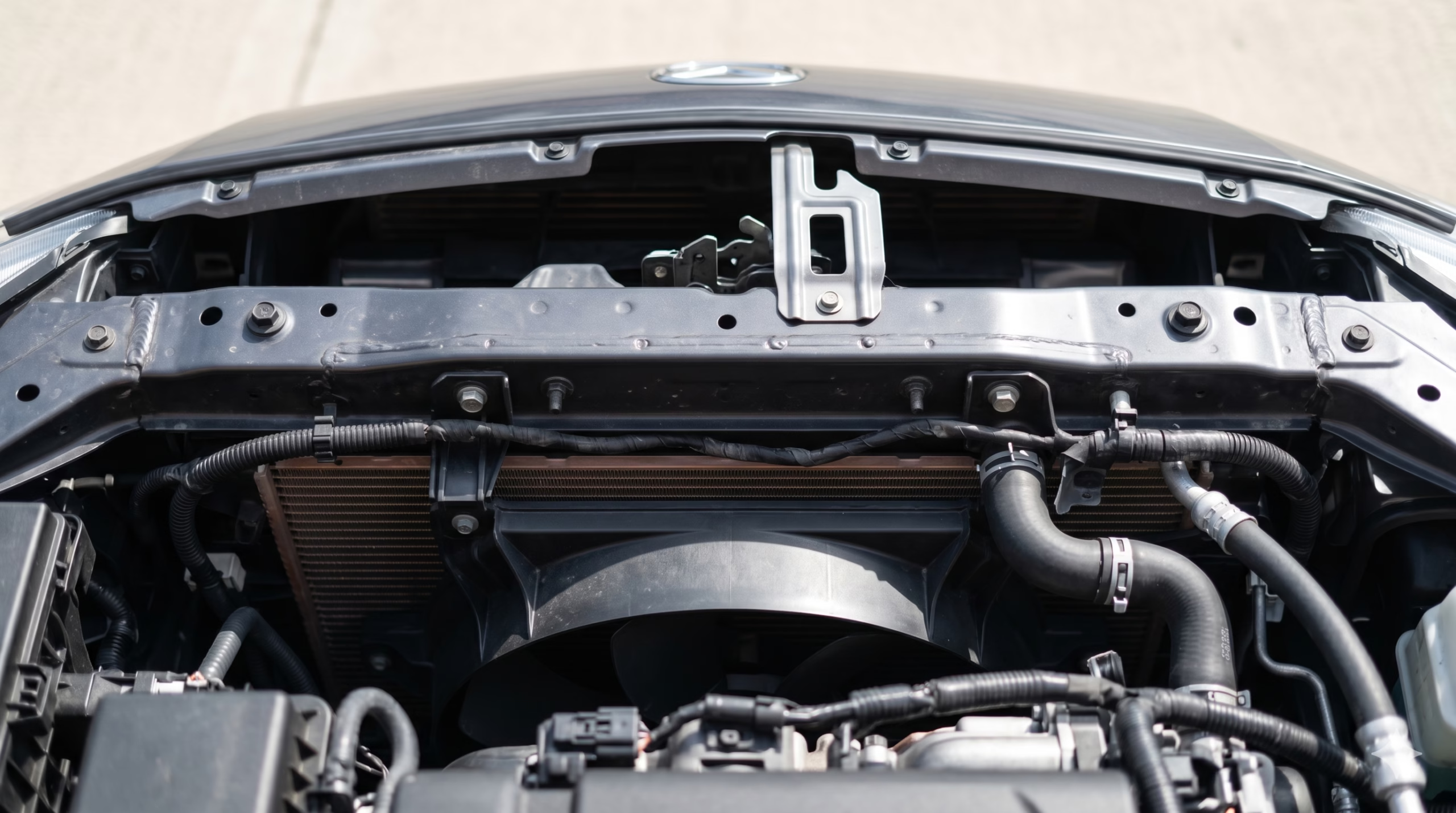
The radiator support — also called the core support — is the structural framework that sits behind the front bumper and holds the radiator, headlights, hood latch, and (on most cars) the front fenders. It takes the brunt of any front-end impact short of a full collision. Replacing it is one of the most common structural repairs done after a front-end hit, and it leaves predictable evidence: replacement bolt heads, fresh paint, and weld patterns that don't match the factory.
How to check (≈2 minutes)
- Open the hood. Look at the assembly running across the front of the engine bay, holding the radiator and connecting to the fenders.
- Examine the bolt heads where the core support attaches to the frame rails and fenders. They should have factory paint covering the hex (see Ep. 1, Sign 03 for what factory paint on a bolt looks like).
- Look at the perimeter weld pattern. Factory spot welds appear as small round dimples at regular intervals; replacement welds are usually continuous beads (MIG welding) and look noticeably different.
- Check the paint color and texture across the entire support. Consistent factory color = original. Any patch of fresh paint = replaced.
A replaced core support is, by itself, often a fine repair — the part is bolted and welded in place and modern OEM-equivalent parts work properly. But it confirms the car had a real front-end impact, which means other structural members (frame rails, strut towers) should be looked at too.
Lift the trunk carpet. Look at the spare tire well.
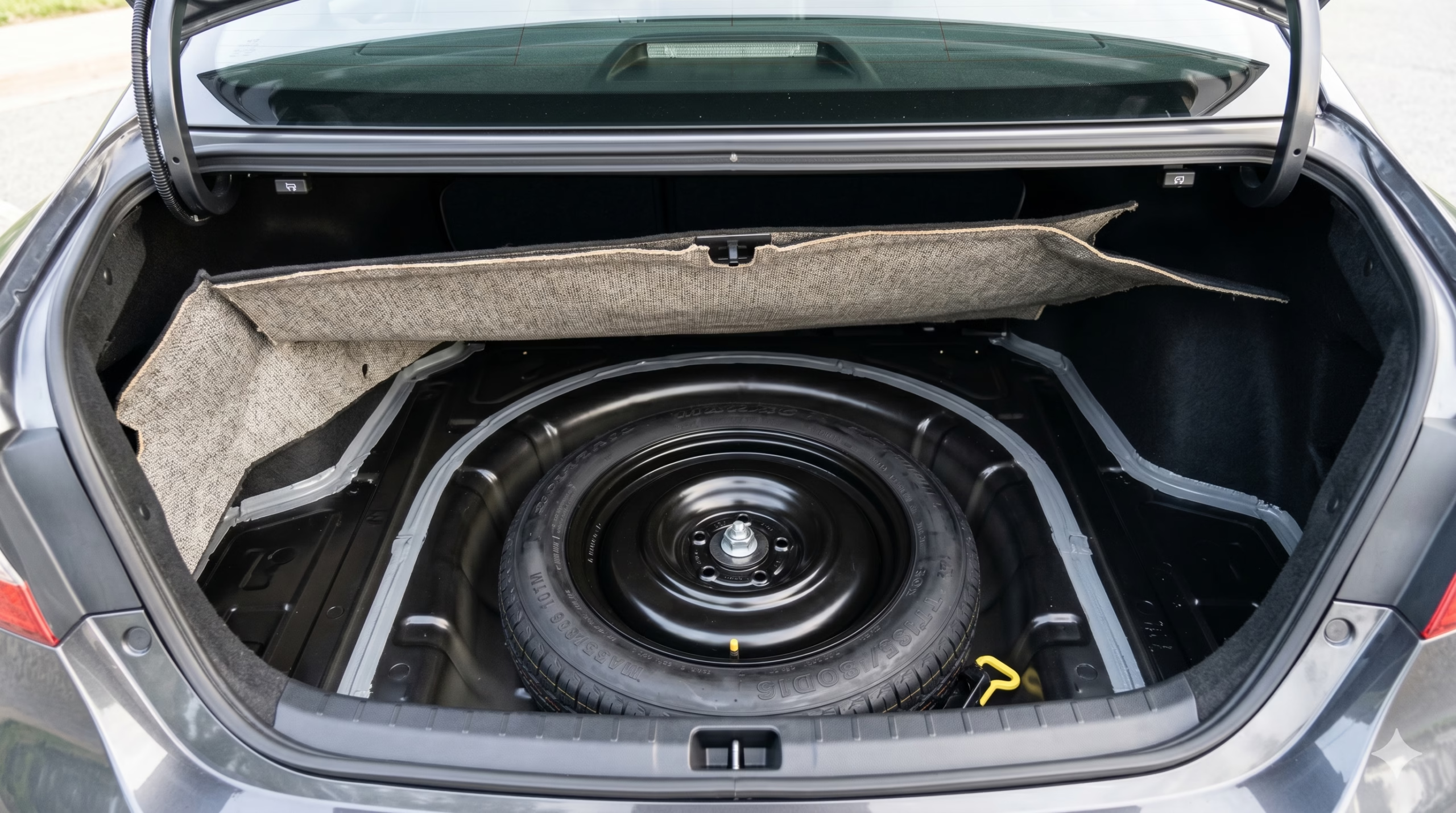
The spare tire well — the round, stamped depression in the trunk floor that holds the spare or jack kit — is one of the most reliable places to find rear-impact evidence. It's stamped as a single piece of the factory floor pan, so any damage or repair to the rear of the car usually involves it. Water staining means a leaking rear seam. Wrinkles mean a deformed floor pan. A line of fresh sealant means a cut-and-weld repair.
How to check (≈90 seconds)
- Open the trunk and lift the floor carpet (or spare tire cover) fully.
- Inspect the spare tire well: paint should be original factory color, sealer beads should be consistent and look stamped-in rather than added.
- Look for water staining, rust, or pooling. Water in the spare tire well almost always means a rear seam is leaking — usually from prior collision repair.
- Run your fingers along the seams where the floor pan meets the quarter panels. Wrinkles, fresh sealant, or new welds tell you the rear of the car was cut and repaired.
Rear-impact structural damage is often hidden behind a new bumper cover and a repainted rear quarter — visually invisible from outside. The trunk floor is where it can't hide. If anything looks off here, walk back through Episode 1's checklist on every panel on the rear half of the car.
You found structural evidence. Three questions to answer next.
Structural repair on a used car is a bigger deal than a repainted bumper — but it's not automatically a deal-breaker either. Modern collision-repair standards exist, certified shops follow OEM repair procedures, and properly repaired unibody cars can absolutely be safe, reliable, and worth buying. The conversation just gets more careful:
- Was the repair done at a certified collision repair facility? A repair documented by an I-CAR Gold Class shop or an OEM-certified facility is a completely different story than an undocumented backyard fix. Ask for the work order. If there isn't one, ask why.
- Were structural members replaced or straightened? Replacement is generally the OEM-approved path for most modern unibody damage. Straightening can be acceptable for minor damage but is increasingly discouraged on high-strength steel structures used in newer cars.
- Does the price reflect what was repaired? A car with documented structural repair history typically sells for 15–30% less than an identical car without — sometimes more, depending on severity. If the price doesn't reflect the history, you've found your negotiation point.
If you can't get clear answers — or if any of the five places above looked questionable — this is the moment to spend $150 to $250 on a professional pre-purchase inspection. A body shop on a lift can see structure you can't see from the parking lot.
Structure tells the truth — on a lift.
A Rippers pre-purchase inspection puts the car on a lift, pulls wheel-well liners, and inspects every structural member from below. We look at every spot you can't reach from a parking lot — undercarriage repair work, frame-machine clamp marks, replaced sections, weld pattern integrity, undercoating consistency. The written report tells you exactly what we found, with photos.
Book a Pre-Purchase Inspection or call (916) 372-5353Continue Spotting a Bad Repair.
- Episode 01
5 Signs Your "Like New" Used Car Was in a Crash
Read Episode 1 → - Episode 02
What Mismatched Paint Really Tells You
Read Episode 2 → - Episode 03 · You are here
The Frame Tells the Truth
- Episode 04 · Up next
When to Pay for a Pre-Purchase Inspection
Read Episode 4 →
Quick answers, in one sentence each.
What's the difference between a frame and a unibody?
A traditional frame is a separate steel ladder structure that the body bolts onto — used today mostly on full-size pickup trucks and large SUVs. A unibody is a single welded assembly where the body and structure are integrated, which is how virtually all modern passenger cars and crossovers are built. Both can suffer structural damage, but the repair procedures and language differ.
Can you fix a bent frame on a car?
Yes, but the right approach depends on the severity, the materials, and the manufacturer's repair specifications. Minor unibody damage can sometimes be straightened on a frame machine. More significant damage usually requires section replacement following OEM-approved procedures. Modern high-strength steel and aluminum structures are increasingly designed to be sectioned and replaced rather than straightened.
Does structural damage affect crash safety?
It can, depending on the quality of the repair. A car's structure is engineered to deform in specific ways during a collision to protect the occupants. Properly repaired structure following OEM procedures can restore that designed behavior; improper repairs may compromise it. This is why the certification and documentation of the repair shop matters.
Will a Carfax report show structural damage?
Only if the damage was reported to insurance, law enforcement, or a participating shop — which is often not the case. Cash repairs, uninsured claims, and work done at non-reporting shops typically don't show on a Carfax. This is why visual inspection of the structural members described in this article remains the most reliable check.
How much does structural damage reduce a car's value?
Typically 15 to 30 percent below a comparable car with no structural history, sometimes more for severe damage. The discount depends on the severity, the quality of the documented repair, and how recently the damage occurred. A documented, professionally repaired structural job at a certified shop holds value better than an undocumented or improperly repaired one.
CA BAR Automotive Repair Dealer Reg. [ARD #294466]
This article is educational and reflects general visual inspection practices used by our technicians. It is not a substitute for a professional pre-purchase inspection, and it does not constitute a safety determination on any specific vehicle. Read the rest of the series and the May 2026 newsletter for more.