


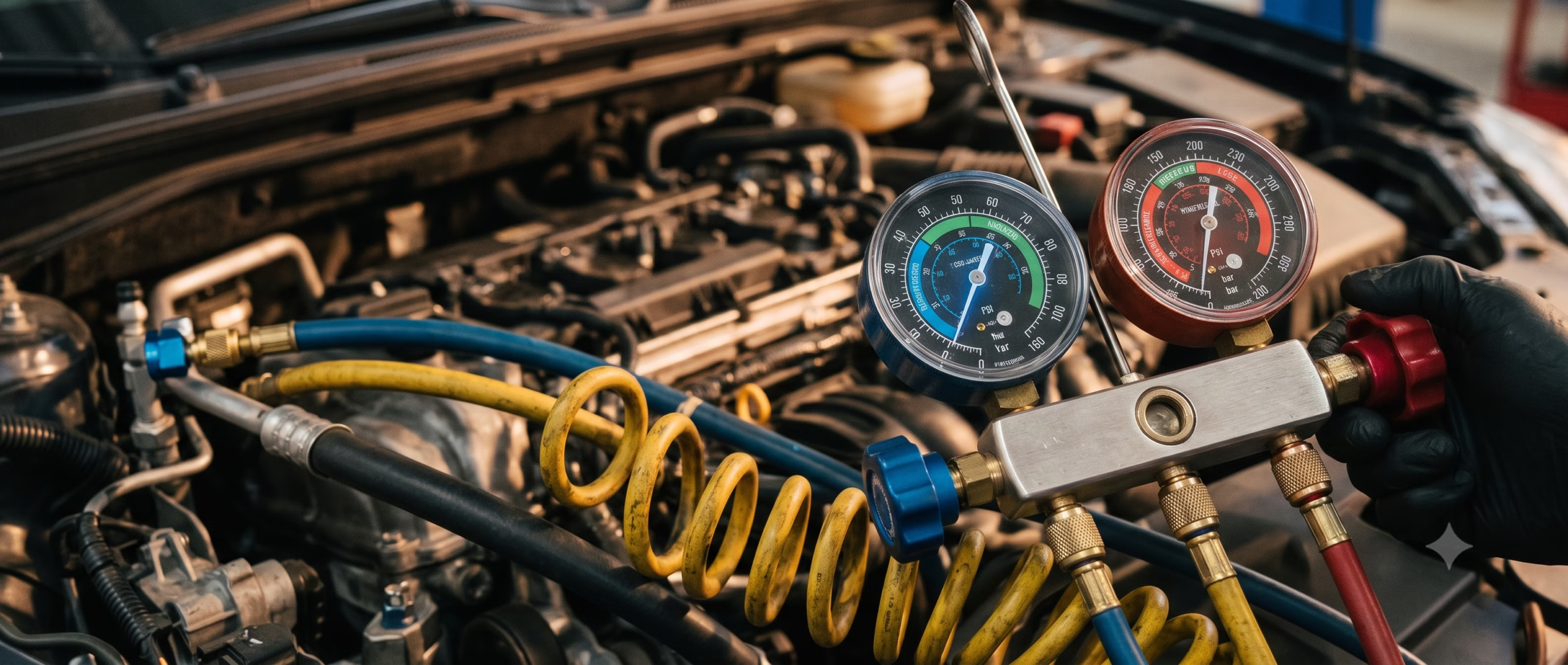
Six Warning Signs.
Six Chances to Act.
Your A/C doesn't fail without warning. It gives you warnings — you just have to know what to listen for. Here are the six early-failure signals most owners miss. Catch them in July for a few hundred. Miss them and August makes it thousands.
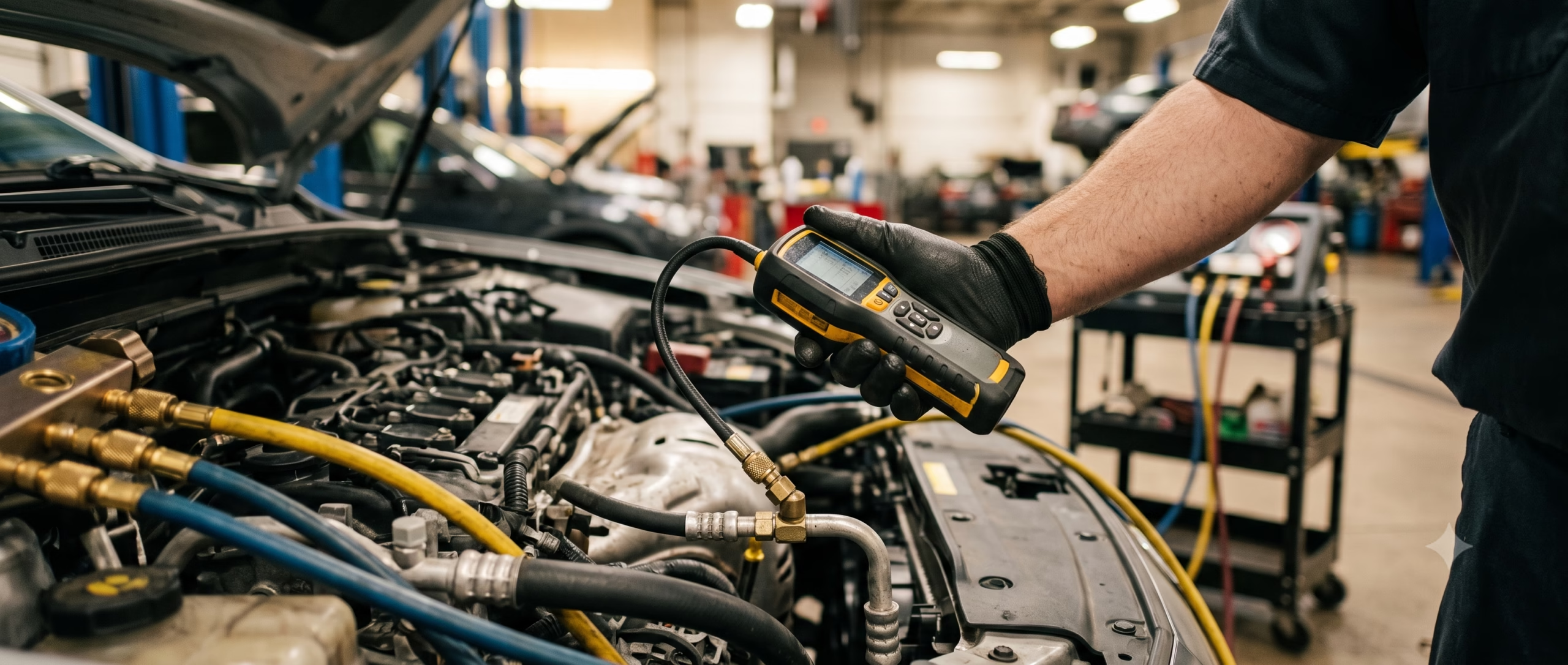
A/C systems are unusually honest. They start telling you they're going to fail weeks — sometimes months — before the failure.
Most A/C failures don't happen suddenly. They happen slowly, over a series of small changes that owners notice, dismiss, and forget until the day it stops working. By the time the A/C dies on a 105°F afternoon, it's been signaling for a while. Every one of the six warning signs below is something you can perceive without any equipment beyond your own senses. Any one of them is worth a phone call. Two or more is worth booking this week.
We've marked each sign with a severity level — Watch, Soon, or Now — so you can triage what you're noticing against how quickly you should act. And at the end, we've laid out the actual cost math of catching versus missing each stage.
Ordered by rough progression — mildest to most urgent.
The A/C isn't as cold as it was last summer.
You get in the car on a hot day, blast the A/C, and it takes noticeably longer to feel cool than it used to. Maybe five or seven minutes instead of two or three. On the freeway it's fine — but idling in traffic, the air just isn't as cold. It's the earliest and most common warning sign, and the one owners are most likely to shrug off as "it's just really hot outside."
The most common cause is low refrigerant from a slow leak. A sealed A/C system doesn't lose refrigerant on its own — if it's low, it's leaking somewhere. Other possibilities: a clogged cabin air filter, aging compressor efficiency, or partial condenser airflow blockage.
Book an A/C inspection this month. If it's just low refrigerant on the July special, service runs $99 (R-134a) or $240 (R-1234yf). If a leak is found and repaired at the same visit, add $150 to $500 depending on where it is.
Cold at highway speed, warm at idle (or the reverse).
The pattern is the diagnostic. If your A/C is cold at 55 mph but blows lukewarm at every stoplight, that points at one set of problems. If it's the opposite — cold when sitting in a parking lot but warm on the freeway — that points at a different set. Owners often notice this but don't connect the pattern to a cause.
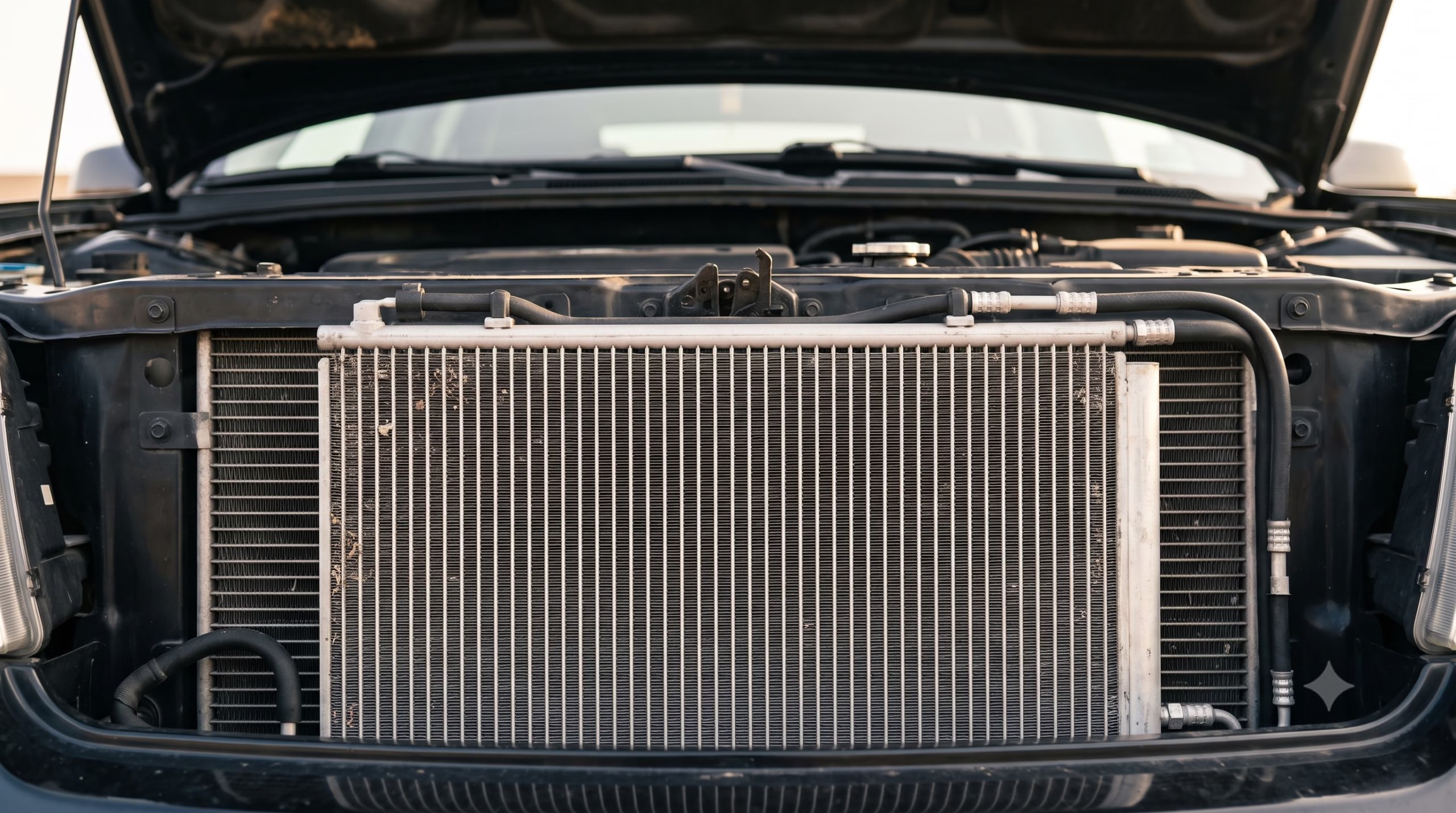
Cold at highway / warm at idle commonly indicates a condenser airflow problem — the electric cooling fan may be weak or failing, or the condenser fins are blocked by road debris and bugs. Cold at idle / warm at highway commonly indicates low refrigerant or a compressor that can't keep up under the higher demand of highway airflow.
Diagnostic first. Fan repair typically runs $300 to $500. Condenser cleaning is often included in service. A weak compressor caught early costs less to address than one that's fully failed.
A musty, sour, or "gym socks" smell when the A/C runs.
You turn on the A/C after the car has been sitting overnight and immediately catch a whiff of something musty from the vents. It usually fades within a minute or two of running, which is why owners often dismiss it. But the smell is the symptom of something that's actively getting worse the longer it's ignored.
Mold and mildew growing on the evaporator core, almost always because the condensate drain that's supposed to carry moisture out of the system is partially clogged. Water pools instead of draining. Given time, the mold colony corrodes the evaporator itself — which is one of the most expensive A/C components to replace because it's buried behind the dashboard.
Book service this week. Evaporator cleaning plus drain clearing runs $150 to $300. Cabin air filter replacement (which often helps with the smell) is $30 to $100. Ignoring the smell until it turns into an evaporator leak is a $1,200 to $2,500 repair.
Clicking, grinding, or whining from under the hood when the A/C engages.
You press the A/C button and hear something you didn't hear before — a rapid clicking, a grinding noise, or a whining/whirring sound coming from the engine bay. Sometimes it only lasts a few seconds when the compressor first engages. Sometimes it continues the whole time the A/C is on.
All three noises point at the compressor, which is the most expensive single A/C component. Clicking is often a failing compressor clutch. Grinding usually means bearing wear inside the compressor. Whining can indicate belt tension issues or bearing wear on adjacent pulleys. Any one of these can precede complete compressor failure — and once the compressor seizes, it can send metal debris throughout the A/C system, turning a $1,000 repair into a $3,000+ rebuild.
Get it looked at this week. Compressor clutch alone runs $300 to $600. Full compressor replacement runs $800 to $2,500 depending on vehicle. Catch it before seizure and you might save that repair by half.
The A/C cycles on and off rapidly — "short-cycling."
You notice a rhythmic click-click-click from under the hood when the A/C is on. The compressor is engaging and disengaging every few seconds instead of running steadily. The air from the vents feels inconsistent — cold, then not, then cold again.
The most common cause is low refrigerant, which drops the system pressure below the point where the safety sensor allows the compressor to run continuously. Other possibilities: a bad pressure sensor, a failing compressor clutch, or wiring issues. Short-cycling doesn't just indicate a problem — it accelerates wear on the compressor clutch, which is expensive.
Book service this week. If it's low refrigerant on the July special, service runs $99 or $240 depending on your refrigerant type. Pressure sensor replacement is typically $150 to $300. Clutch replacement is $300 to $600.
Warm air from the vents while the A/C is on.
You press A/C. The button lights up. You hear the compressor engage. But the air from the vents is warm, or barely cool. Not "less cold than usual" — actually warm. This is the sign owners almost always take seriously because it's undeniable. It's also the sign that means whatever's wrong is already at active-failure stage.
Several possibilities, all of them significant: total refrigerant loss from a major leak, a failed compressor, a stuck blend door (which is directing engine heat into the cabin instead of A/C-cooled air), or a blocked expansion valve. None of these are recharge fixes on their own — they all need diagnostic work first.
Book today. Repair range is wide because the cause matters — anywhere from $300 for a small leak repair and recharge, to $3,000+ for compressor replacement with associated component damage. The diagnostic tells you which end of the range you're in.
What early catches cost vs. what late catches cost.
A/C repair pricing scales dramatically with how far along the failure has gotten. The same underlying issue — a leak — costs a few hundred dollars caught early or several thousand dollars caught late. Here's the real range of what we see across a summer:
- $99 – $240 July A/C service special. Full evacuation, leak check, and refrigerant recharge to spec. The $99 tier covers R-134a systems; $240 covers R-1234yf systems.
- $150 – $300 Evaporator cleaning + drain clearing. Addresses Sign 03 (musty smell). Prevents evaporator core corrosion.
- $150 – $300 Pressure sensor replacement. Common cause of short-cycling (Sign 05) when refrigerant level is normal.
- $300 – $600 Compressor clutch replacement. Addresses Sign 04 (clicking noise) if the compressor itself is still healthy.
- $300 – $500 Cooling fan repair or replacement. Common Sign 02 cause when A/C is cold at highway and warm at idle.
- $400 – $800 Condenser replacement. For failed cores, physical damage, or bad crimps at fittings.
- $800 – $2,500 Compressor replacement. Sign 04 ignored long enough. Wide range because compressor cost varies significantly by vehicle.
- $1,200 – $2,500 Evaporator replacement. Sign 03 ignored long enough. Most of the cost is labor — the evaporator lives behind the dashboard and requires significant disassembly.
- $2,000 – $4,000+ Full system rebuild. When a seized compressor sends debris through the system, the repair means new compressor, new condenser, new expansion valve, flushing all lines, and often a new evaporator. This is what "I ignored it all summer" costs.
The pattern is consistent every year: catching a warning sign in July usually keeps the repair in three-figure territory. Catching the same underlying issue in August or September — after driving through peak heat with a compromised system — routinely triples or quadruples the bill.
If your A/C is producing warm air (Sign 06) and the outdoor temperature is above 100°F, avoid long drives — especially with kids, elderly passengers, or pets in the car. Cabin temperatures on a stopped or slow-moving car in Sacramento summer can pass 130°F within minutes. Heat illness escalates fast. Book service, plan around the hottest hours, and if you must drive, keep windows down and stay near shade and cool interior stops.
Any of the six? Book while it's still July.
The $99 R-134a and $240 R-1234yf service special runs through July 31, 2026. Free intake, we identify your refrigerant type before quoting, and we provide a written estimate for anything beyond the base service. If you spotted two or more of the six signs above, this week is a better time to book than next week.
Book Your A/C Service or call (916) 372-5353Also worth reading: last week's guide to R-134a vs R-1234yf explains why the two refrigerants have such different service prices — and how to identify which one your car uses in about 60 seconds.
More from July.
- Jul 9
R-134a vs R-1234yf: The Refrigerant Story
Read July 9 → - Jul 16 · You are here
Six Warning Signs Your A/C Is About to Fail
- Jul 23 · Up next
Heat, Not Cold, Is What Kills Car Batteries in Sacramento
Read July 23 → - Jul 30
August Is Coming: A Peak-Summer Prep Guide
Read July 30 →
Quick answers, in one sentence each.
What are the early warning signs of a failing car A/C?
The six most common early-failure signs are: cooling that's noticeably weaker than last summer, A/C that's cold at highway speed but warm at idle (or the reverse), a musty smell when the A/C runs, unusual clicking or grinding noises when the compressor engages, rapid on-off cycling of the compressor ("short-cycling"), and warm air from the vents while the A/C is on. Any one of these is worth an inspection; two or more usually indicates a specific component is at fault and repair costs increase significantly if left unaddressed.
Why does my car A/C smell musty?
A musty or sour smell from the A/C vents almost always indicates mold and mildew growth on the evaporator core, typically caused by a partially clogged condensate drain that lets water pool instead of draining properly. Left unaddressed, the mold accelerates corrosion of the evaporator itself — replacing an evaporator that's failed from this cause runs $1,200 to $2,500 in most vehicles. Evaporator cleaning plus drain clearing typically runs $150 to $300 when caught early.
Why is my car A/C cold at highway speed but warm at idle?
Cold at highway and warm at idle typically indicates a condenser airflow problem — usually a weak or failing electric cooling fan, or debris blocking airflow through the condenser fins at the front of the vehicle. At highway speed, natural airflow keeps the condenser cool enough to reject heat. At idle, the electric fan has to do that work alone, and if it's underperforming, the system loses cooling capacity. Fan repair typically runs $300 to $500.
Can I still drive with a weak A/C in Sacramento summer?
You can, but the risks scale with outdoor temperature and drive length. On short trips under 90°F, a weak A/C is uncomfortable but manageable. On long drives above 100°F, a weak or failed A/C creates real heat-illness risk — cabin temperatures can pass 130°F on a stopped or slow-moving car in Sacramento summer. If the A/C is producing warm air with passengers who are elderly, pregnant, very young, or have medical vulnerabilities, book service before the next drive rather than after it.
How much does a compressor replacement cost in Sacramento?
Automotive A/C compressor replacement in the Sacramento area typically runs $800 to $2,500, with the wide range reflecting significant differences in compressor part cost across vehicle makes and models. Vehicles with more accessible engine bays and standard-part compressors sit at the lower end; vehicles with buried compressors, dual-A/C rear systems, or premium-brand parts sit at the upper end. If compressor failure has caused debris contamination throughout the system, the repair scope expands to a full system rebuild at $2,000 to $4,000 or more.
CA BAR Automotive Repair Dealer Reg. ARD #294466
This article describes common A/C warning signs and their typical causes for educational purposes; it is not a substitute for professional diagnosis of any specific vehicle. Pricing ranges reflect typical Sacramento-market rates and vary by vehicle make, model, and condition. The A/C service special ($99 R-134a / $240 R-1234yf) runs through July 31, 2026, and applies to standard service scope on the indicated refrigerant type. Systems with active leaks, failed components, or contaminated refrigerant may require additional service; free written estimate provided before any additional work. All services are customer-pay only. See the rest of the series and our July 2026 newsletter for more.