


What Sacramento
Heat Does to
Your Paint.
100°F days, UV index 10+, and asphalt that hits 150°F by noon. What it actually costs you in paint, plastic, and resale value — plus the three habits that prevent most of it.
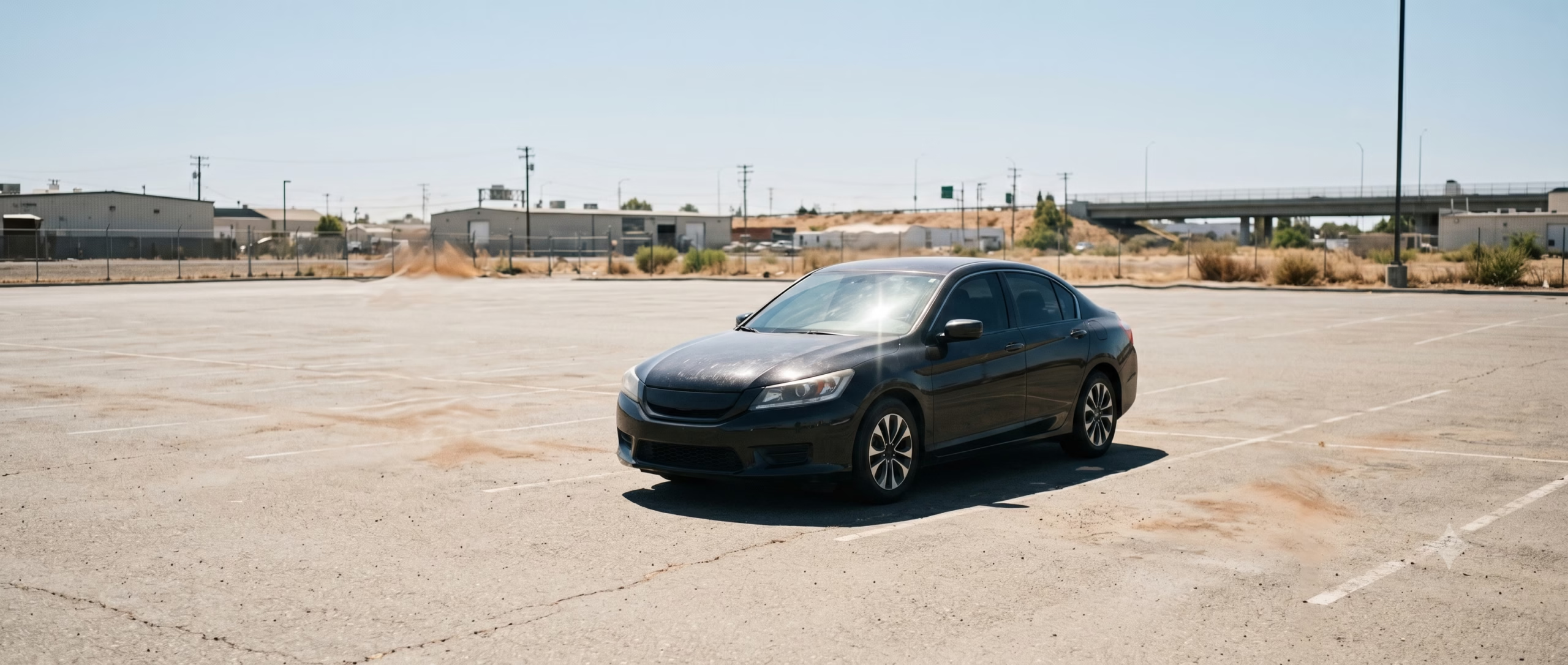
Sacramento isn't Phoenix. But on a Wednesday in July, your driveway might disagree.
We tend to think of Sacramento summers as moderate. Compared to Phoenix or Las Vegas — sure. Compared to what modern car paint, plastic, and rubber are engineered for? Sacramento is one of the harshest environments in California. We get more than thirty 100°F+ days in a typical summer. Our UV index reaches 10 and 11 — the same "extreme" category as Phoenix and Tucson. And on a black hood parked in the sun, the paint surface routinely passes 150°F by noon.
Here's what those numbers actually do to your car over five to ten years — and what three simple habits can do to slow most of it down.
What heat and UV actually do under the surface.
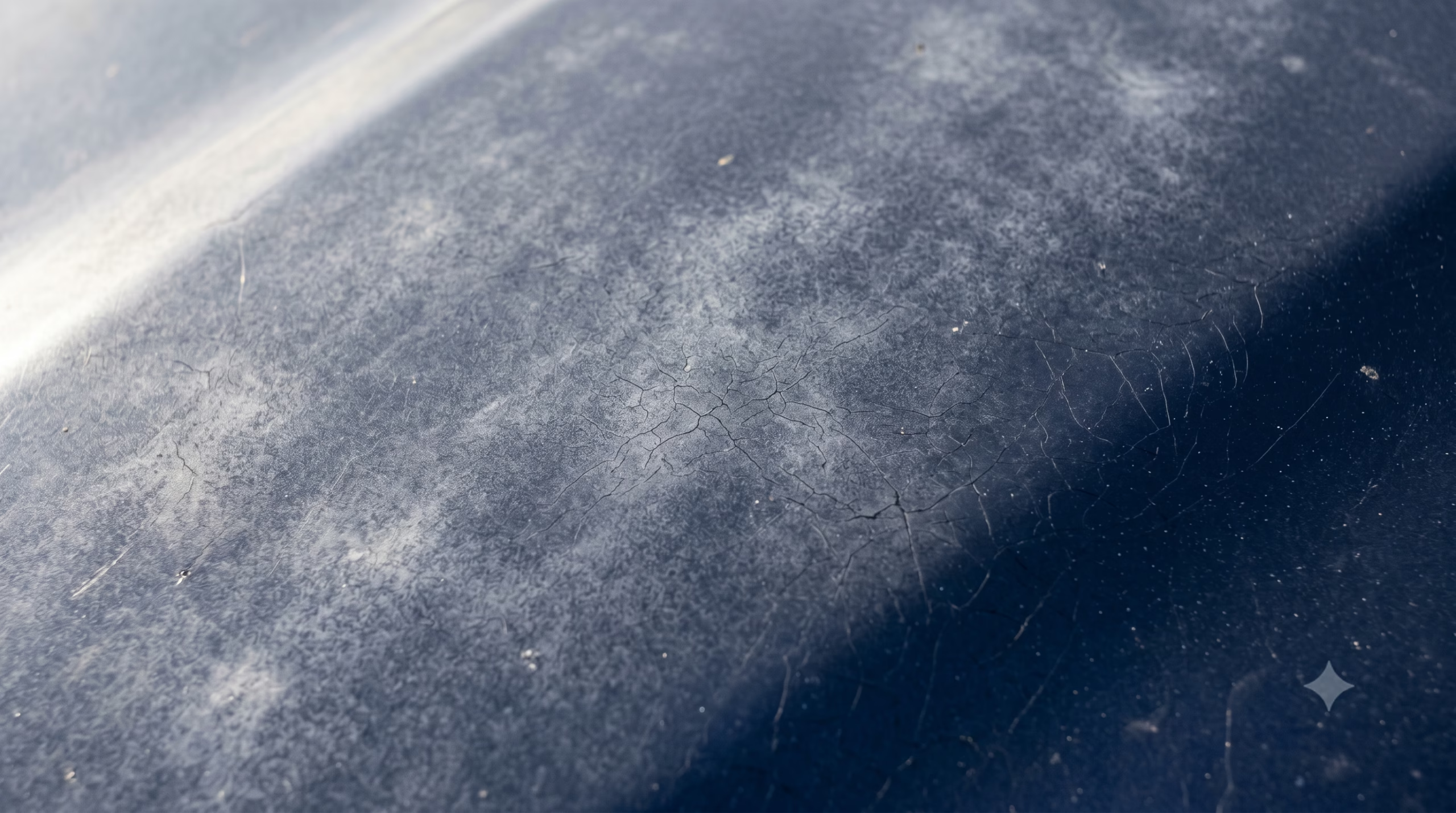
Modern automotive paint is three layers stacked on metal: primer, color coat, and clear coat. The clear coat on top is the only one designed to face the sun. It contains UV-absorbing resins whose entire job is to break down instead of letting the color coat below them break down. That breakdown is permanent. Every summer day, the clear coat loses a little of its UV-blocking capacity. It can't be recharged.
Year 1–3 · Invisible
Chemical changes are happening. UV-absorbing compounds in the clear coat are being consumed. You can't see anything yet. The surface still looks brand new.
Year 4–6 · The first visible signs
Horizontal surfaces (hood, roof, trunk lid, top of the front fenders) start showing slight dullness — the depth of the reflection isn't quite what it was. Water spots from sprinklers no longer wash off as easily. Bird droppings and tree sap left for more than a few hours start leaving permanent etch marks. The paint is still healthy, but it's losing its armor.
Year 7+ · Clear-coat failure
On vehicles that have lived their lives in direct Sacramento sun, the clear coat can begin to chalk, peel, or "delaminate" — flaking off in patches. Once this happens, the color underneath fades rapidly because there's no longer any UV protection above it. Reds and dark colors are worst. At this stage, the only fix is repainting the affected panels. There's no product on the market that restores a delaminated clear coat.
Heat damage on paint is invisible right up until it isn't. By the time you notice the change, the chemistry has been going on for years.
It's not just paint
The clear coat takes the headline damage. But the same UV and heat also work on every other exposed surface: plastic trim becomes gray and chalky (we covered this in last week's article — trim restoration is the biggest visible recovery option), door and window seals dry out and shrink, dashboards crack, wiper blades die in months instead of years, and tire sidewalls develop the fine cracks called dry rot. Sacramento ages cars on a faster clock than most of California.
What that damage actually costs you.
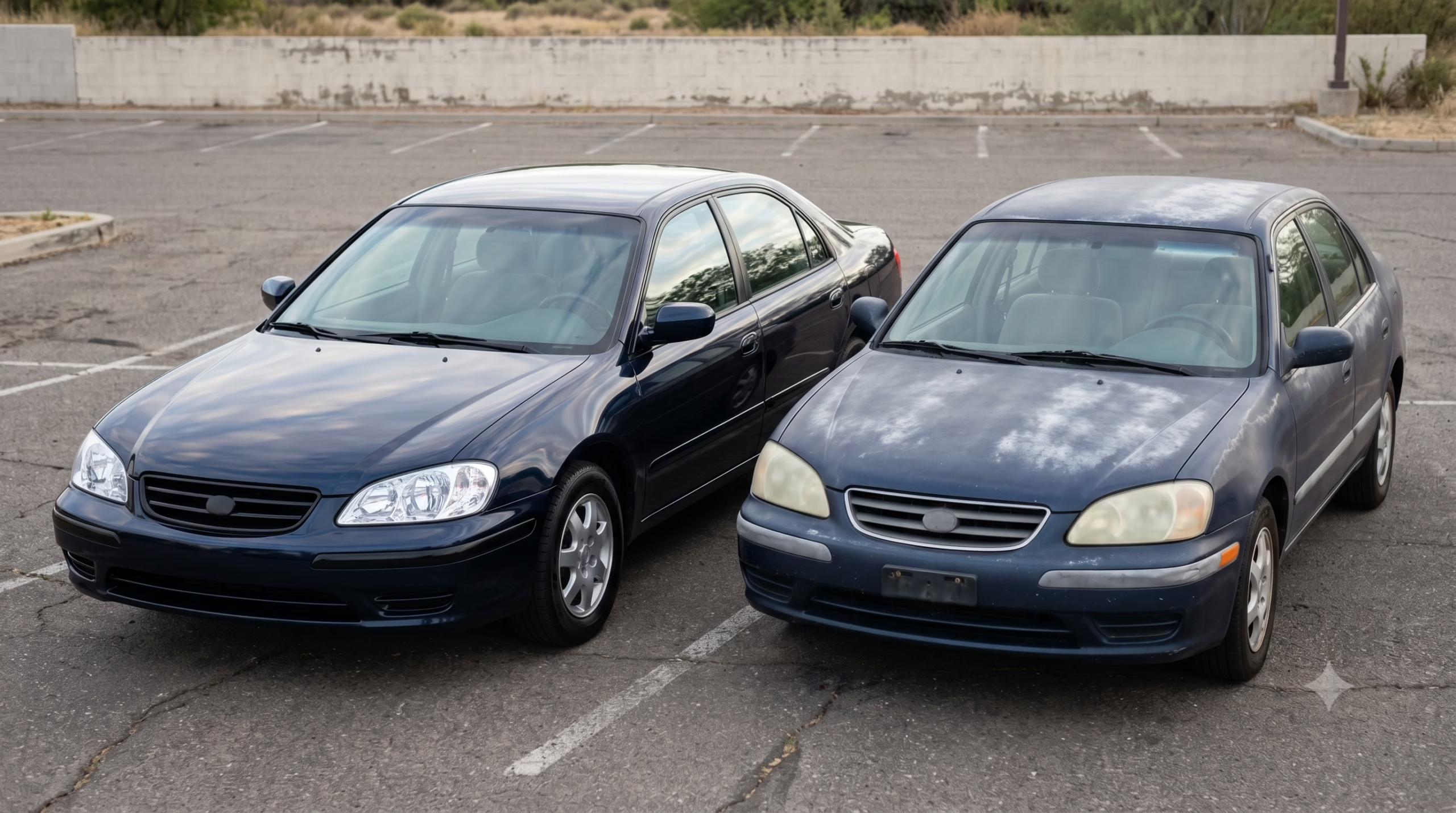
UV damage doesn't crash your car. It doesn't strand you on the highway. It just quietly removes value — from the look of the car, from the cost to maintain it, and from what you'll be offered for it on resale day. None of it is covered by any insurance policy. "Wear from sun exposure" is a universal exclusion. The repair bills are entirely yours.
A single hood, fender, or door — color-matched and blended into adjacent panels.
Once multiple panels have failed, panel-by-panel often isn't economical. Full repaint becomes the path.
Cracked or warped dashboards are model-specific parts plus labor. Some are surprisingly expensive.
Visible UV damage typically reduces private-party sale price by 10 to 20 percent below comparable healthy examples.
The math is consistent: spending a few hundred dollars over a car's life on protection is materially cheaper than restoring or repainting later. Which brings us to the prevention side.
Three habits that prevent most of the damage.
None of these require a body shop. The first two are free. The third can be done at home with consumer products and re-applied every couple of months — or done professionally and last for years. Pick whatever fits your budget and how long you plan to own the car.
Park smart. It's the single biggest factor.
The hierarchy, in order of how well it protects paint: garage > carport > deep shade > tree shade > covered car cover > direct sun. Cutting two hours per day of direct sun exposure adds years to a paint job. Even a free option — like consistently parking on the shaded side of the lot at work — makes a measurable difference over 5+ years.
One caution: tree shade is mixed. The shade helps, but sap and bird droppings hurt. If you park under a tree all summer, increase how often you wash to weekly.
Wash properly. Decontaminate quarterly.
UV damage is bad. UV damage combined with contaminants locked into the paint is much worse. The basics: wash with two buckets (one with soap, one with rinse water) and a clean microfiber mitt — not a sponge. Dry with clean microfiber towels, not chamois or a regular bath towel. Never let bird droppings, tree sap, or water spots sit on the paint for more than a day in summer — they etch into the clear coat permanently within hours at Sacramento surface temperatures.
Every three months, do a decontamination wash — clay bar or clay mitt to lift embedded contaminants that a regular wash can't reach. It's the single biggest "before and after" most owners can do themselves for under $25 in supplies.
Apply protection. Pick a tier and stick with it.
Paint protection comes in three durability tiers, each with a clear cost/duration tradeoff:
Wax ($15–$40 at home, ~1–3 months durability) is the cheapest option and the one most owners default to. Done well, every quarter, it's enough for daily drivers under 5 years old.
Paint sealant ($40–$100 at home, or as part of a professional service; ~6–12 months durability) is a synthetic step up from wax. Better UV blocking, more contaminant resistance, fewer re-applications per year. The Summer Send-Off Bundle includes a professional paint sealant + UV protection wax application.
Ceramic coating ($800–$2,000+ professional, 2–5 years durability) is the premium option. Chemical bond to the clear coat. Hydrophobic. UV-stable. Much stronger contaminant resistance. The math works for newer vehicles you plan to keep, or any vehicle with sentimental or resale value you want to protect.
Most paint damage we see could have been prevented with two of the three habits above. Park smart and wash properly are free. The third item — applied protection — pays for itself in resale value alone over 5+ years.
Pick a tier. Start before August.
At Rippers we apply both professional paint sealants (the longer-lasting cousin of wax) and full ceramic coatings. The Summer Send-Off Bundle includes paint sealant + UV protection as one of its five services at $549 total — the most common path for owners who want noticeably better protection without committing to ceramic. For longer-term protection, ceramic coating is priced separately and depends on vehicle size and prep work required. Free in-person quotes either way.
Get a Free Quote or call (916) 372-5353Also worth knowing: the Summer Send-Off Bundle includes paint sealant + UV protection plus headlight restoration, bumper scuff repair, interior detail, and hand wash at $549 (save $210 vs. à la carte). Through June 30.
More from June.
- Jun 9
Sending Them Off Safely: A Pre-College Car Checklist
Read June 9 → - Jun 16
This Father's Day, Treat Dad's Truck Right
Read June 16 → - Jun 23 · You are here
What Sacramento Summer Heat Does to Your Paint
- Jun 30 · Up next
The 20-Minute Pre-Departure Walkaround
Read June 30 →
Quick answers, in one sentence each.
How does Sacramento summer heat damage car paint?
Sacramento UV index regularly reaches 10 or 11, and parked-car hood surfaces routinely pass 150°F by noon in the summer. The clear coat — the protective top layer of automotive paint — contains UV-absorbing resins that break down to protect the color coat beneath. That breakdown is permanent, and over 5 to 7 years of Sacramento exposure produces visible dulling, fading on horizontal surfaces, and eventually clear-coat delamination requiring repainting.
What temperature can damage car paint?
Surface temperatures above approximately 140°F begin accelerating clear-coat resin breakdown, and contaminants like bird droppings and tree sap etch the paint within hours at those temperatures. In Sacramento, parked dark-colored hoods regularly exceed 150°F at noon from June through September — meaning paint protection and contaminant removal matter more here than in coastal California cities.
How can I protect my car paint from the sun?
Three habits prevent most UV and heat damage: park out of direct sun whenever possible (garage, carport, or shade), wash and decontaminate the paint regularly (every 1 to 2 weeks plus a clay-bar decontamination every 3 months), and apply a paint protection product appropriate to your timeline. Wax lasts 1 to 3 months, paint sealants last 6 to 12 months, and ceramic coatings last 2 to 5 years.
Is ceramic coating worth it in California?
For Sacramento Valley and Central Valley vehicles, ceramic coating typically pays for itself in resale value preservation over 5 or more years of ownership. Ceramic coatings provide significantly stronger UV protection, contaminant resistance, and hydrophobic water-spot prevention than wax or paint sealant. The math works best for vehicles you plan to keep for at least 3 years, since the coating's 2-to-5-year durability matches that timeline.
How often should I wax my car in Sacramento?
Most consumer waxes last 1 to 3 months under Sacramento conditions, meaning a wax-protected car should be re-waxed roughly every quarter — four times a year. Paint sealants extend that to 6 to 12 months, and ceramic coatings to 2 to 5 years. Sacramento's heat and UV shortens the durability of all paint protection products compared to coastal California climates, so build the maintenance schedule accordingly.
CA BAR Automotive Repair Dealer Reg. ARD #294466
This article is educational. Pricing ranges reflect typical Sacramento-market rates and are subject to change based on vehicle size, condition, and prep work required. Final pricing confirmed at a free in-person estimate. All services are customer-pay only. Climate data sourced from NOAA Sacramento normals and AAA parked-car surface temperature studies. See the rest of The Send-Off Issue and our June 2026 newsletter for more.