


August
Is Coming.
The final week of our July series is the checklist that ties it all together — the categories we've covered plus the ones we haven't, in a single peak-summer prep guide you can run through in one afternoon before Sacramento's hottest month arrives.
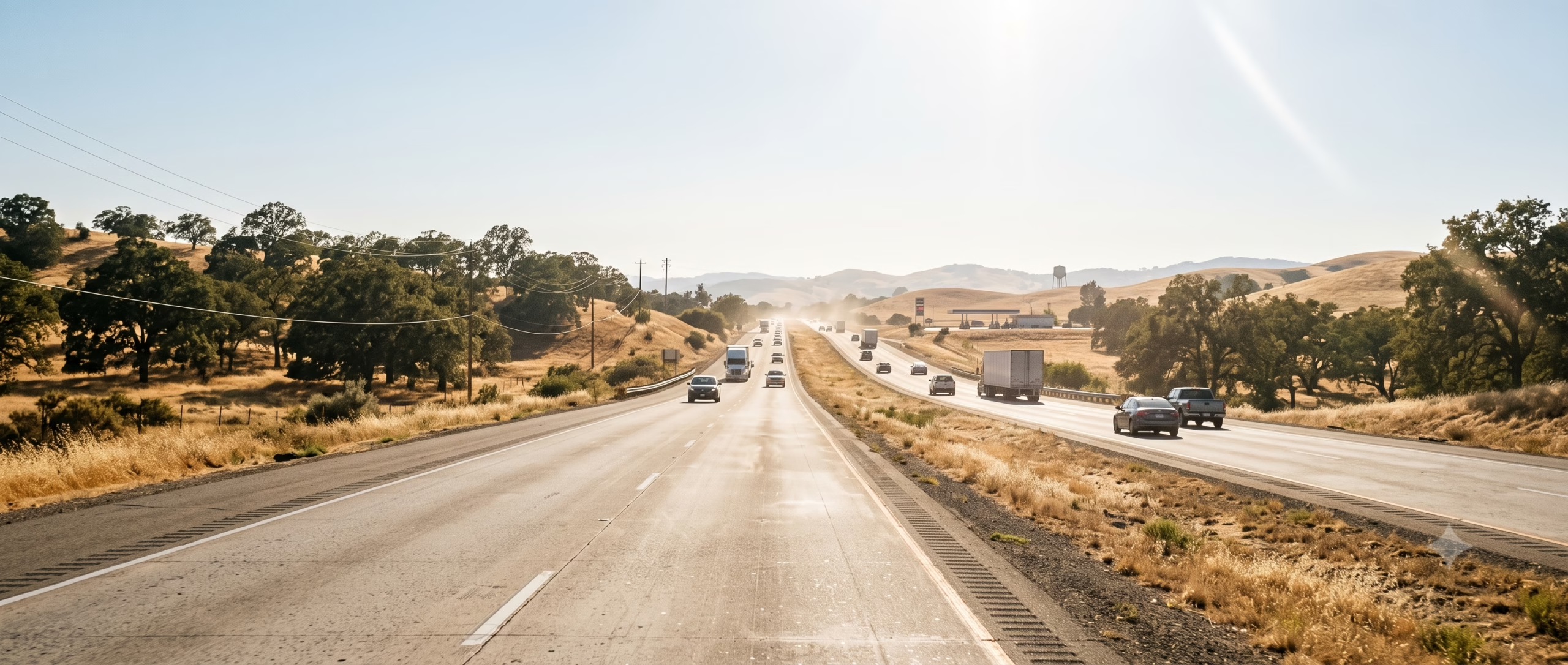
July was the warm-up. August is when the Central Valley shows you what parts of your car it can find.
We've spent this month walking through the systems that fail first when Sacramento heat gets serious — the refrigerant story, the six A/C warning signs, and why heat, not cold, is what actually kills car batteries. The pattern across all three is the same: July stresses your car, August exposes it.
Days over 100°F in a typical Sacramento August — the most of any month.
Engine bay ambient after a highway drive on a hot afternoon.
Interior temperature within minutes on a parked car in direct sun.
This final guide is the comprehensive checklist we'd hand you if you walked into the shop and asked, "What should I check before August?" It covers four systems — cooling, starting, rubber-and-fluids, and a twenty-minute self-check any owner can do in their own driveway. It's also the last piece of our July series, so we've folded in short callbacks to the three prior blogs where relevant.
The three cooling systems most owners forget they have.
When people say "car cooling system" they usually mean the A/C. But your car has three distinct systems dealing with heat, and August is when the weakest one shows up. All three need to be working — and any one of them can fail in a way that damages the others.
A/C System Cabin Comfort
The refrigerant loop that keeps the interior livable in 100°F+ conditions. We spent the first two weeks of July on this: which refrigerant your car uses (there are two), what the six early-failure signs look like, and what repair costs run.
Check now: Does the A/C get cold within two or three minutes of starting? Is the output steady at idle and at highway speed? Any of the six warning signs we covered?
Refresh: The Refrigerant Story →Engine Cooling Radiator + Coolant
The coolant loop that keeps the engine itself from overheating. In Sacramento's Central Valley heat, this system is under continuous stress. Coolant degrades over time, hoses harden and crack, radiator caps lose their pressure rating, and thermostats fail without warning.
Check now: Coolant level in the reservoir (never open the radiator cap on a hot engine — steam burn risk). Coolant color and clarity — it should be translucent pink, orange, green, or blue depending on the vehicle. Muddy, brown, or rusty coolant is old and needs to be flushed. Hoses should be firm, not soft or cracked at the fittings.
Cabin Filtration Cabin Air Filter
The paper filter that scrubs the air coming into your cabin. In Sacramento — with Central Valley dust, Delta pollen, and wildfire smoke that can arrive on any August afternoon — this filter earns its keep. A clogged cabin air filter also strains the A/C by reducing airflow.
Check now: When was this last replaced? If you don't remember, or it's been more than 12,000 miles, replace it. Under $30 in parts on most vehicles, 15 minutes of work.
The three parts that have to work together to start the car.
Every start of your engine is a small event that involves the battery, the alternator, and the starter working in sequence. In Sacramento, the battery is the shortest-lived of the three — but the other two matter, and August is a common month for hidden problems to become obvious problems.
Battery 3-Year Watch
The single most important item on this list, and the one we spent all of last week's blog on. In Sacramento's climate, batteries typically last 30-36 months — significantly shorter than the 48-58 months you'd get in a moderate climate. If your battery is 3+ years old and hasn't been tested this summer, that's the first thing to fix.
Check now: Age (write the install date on the top of the case with a marker if it isn't already there). Resting voltage with a multimeter — 12.6V+ is healthy, below 12.0V is failing. Terminal condition — blue-green corrosion is a sign the battery has been running hot.
Refresh: Why Heat Kills Batteries →Alternator Charging Output
The generator driven by the engine that charges the battery while you drive. When the alternator weakens, the battery discharges even during normal operation — and then owners blame the battery. A weak alternator can also make a healthy battery fail intermittently.
Check now: With the engine running, measure battery voltage — you should see 14.0-14.6V (this is the alternator charging). If you see 12.5-13.0V with the engine running, the alternator isn't charging properly. Any shop can test this in about 30 seconds.
Starter Cranking
The motor that turns the engine over during a start. Starters typically last 100,000-150,000 miles or more, but heat accelerates internal wear, and starters that were "fine" in June sometimes decide they're done in August.
Check now: Listen to the sound of your starts. A healthy starter engages crisply — the engine catches within 1-2 seconds of turning the key or pressing the button. A failing starter takes longer, or clicks without cranking, or produces a grinding noise. These are shop-diagnosis territory, not DIY.
Everything else that heat wears out.
These are the parts of your car that don't have their own dashboard warning light — the stuff that ages quietly through summer and only shows up when you happen to notice. All of them are due for a look before August:
Tires Pressure + Tread
Hot pavement in August can push tire pressures well above the manufacturer's target. Overpressured tires wear the center of the tread; underpressured tires wear the edges and run hot enough to fail. Both are common in Sacramento summer.
Check now: Pressure when cold (before the first drive of the day) with an accurate gauge — the target PSI is on the driver's door jamb, not on the tire sidewall. Tread depth with a penny in the shallowest groove — if you can see all of Lincoln's head, the tire is at or near replacement. Sidewalls for cracks or bulges, which heat accelerates.
Engine Oil Viscosity Under Heat
Motor oil breaks down faster in heat. If you're due for an oil change, don't push it into August. Fresh oil at the start of a hot month is one of the cheapest things you can do for your engine's peak-heat life.
Check now: Level on the dipstick (engine off, car level, wait five minutes after a drive). Color — fresh oil is amber, aging oil is dark brown, oil that's overdue is black and thick. Any milky appearance means coolant is leaking into the oil — that's an immediate shop visit.
Brake Fluid 2-Year Interval
Brake fluid is hygroscopic — it absorbs moisture from the air over time, even in a sealed reservoir. Contaminated brake fluid boils at a lower temperature, and boiled brake fluid produces vapor that compresses under braking. That's how you get a mushy pedal on a long summer downhill descent.
Check now: Level in the reservoir (should be between MIN and MAX). Color — fresh brake fluid is nearly clear or pale amber, contaminated fluid is dark brown. Recommended service interval is roughly every two years regardless of mileage.
Wiper Blades Heat-Cracked Rubber
Wiper rubber cracks and hardens in Sacramento sun. You won't need them until October, but when you do, they'll matter. Cheap and quick to replace, and now is when you can see and feel the damage before the first fall rainstorm surprises you.
Check now: Run your finger along the rubber edge — cracked, brittle, or torn means replace. Test the wipers on the windshield with washer fluid — streaking or chattering means replace.
Never open a radiator cap on a hot engine. The cooling system is pressurized when hot and the escaping steam can cause severe burns. Wait for the engine to cool for at least an hour after driving. When in doubt, check fluid levels at the reservoirs (which are safe to open) rather than at the radiator cap itself.
Twenty minutes. No tools. Done in your driveway.
Almost everything in this article is something an owner can perceive without any equipment beyond a tire pressure gauge and their own eyes and ears. Here's the compressed version — the twenty-minute check you can run tomorrow morning before it gets hot. Do it with a cool engine (first thing in the morning is ideal):
Pop the hood, look around
Any obvious leaks (puddles, drips, wet spots on hoses)? Any loose or frayed belts? Any hoses that look cracked or bulged? A ninety-second visual scan catches more than you'd think.
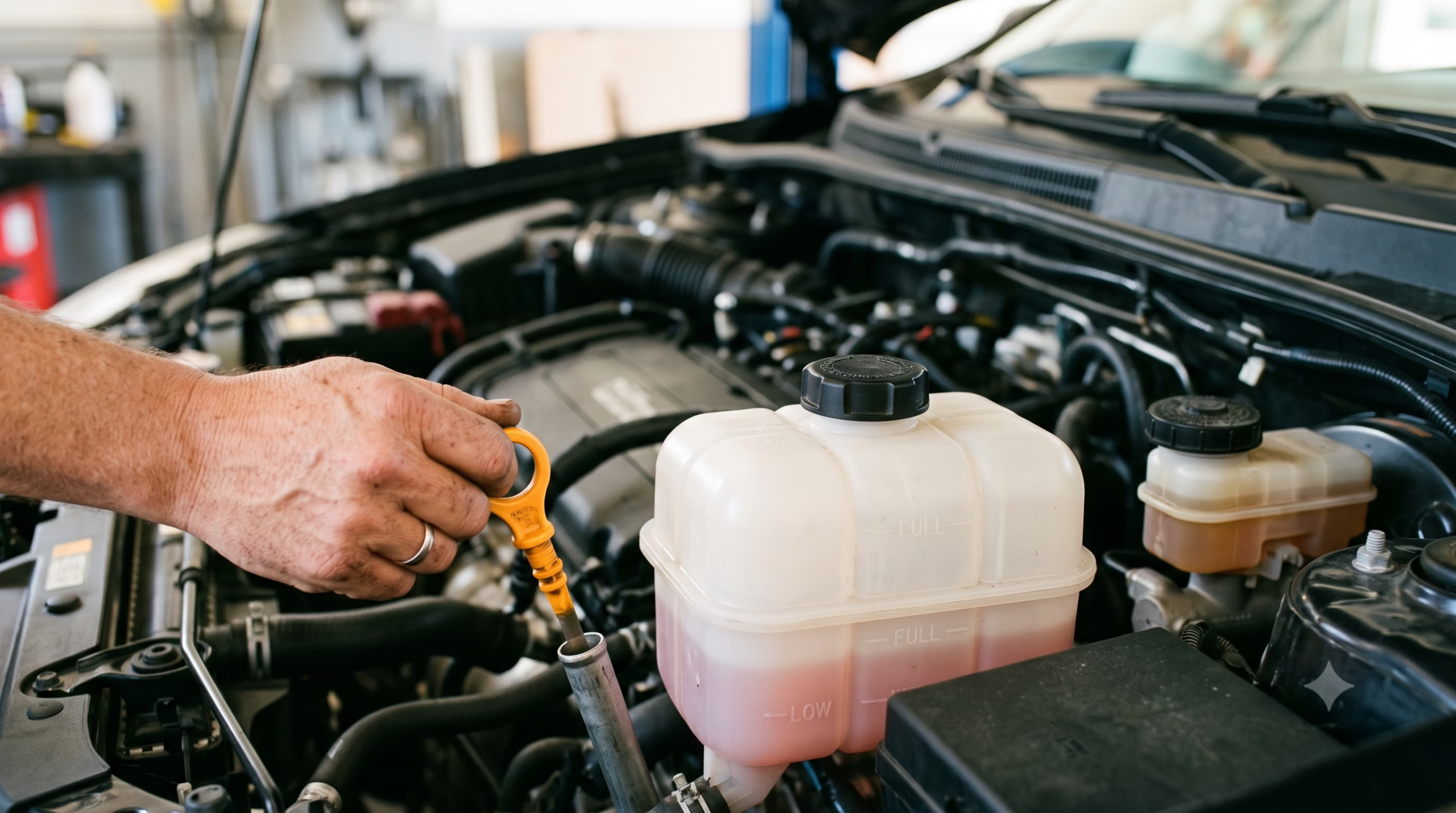
Check coolant level at the reservoir
Reservoir should be between MIN and MAX. Coolant color should be translucent pink, orange, green, or blue — not muddy or brown. Never open the radiator cap itself on a warm engine.
Check engine oil on the dipstick
Level between the two marks. Color amber to medium brown. If it's black, thick, or milky, book an oil change this week.
Check brake fluid at the reservoir
Level between MIN and MAX. Color should be nearly clear or pale amber. Dark brown means it needs to be flushed.
Check tire pressure with a gauge
All four tires plus the spare, when cold. Target pressure is on the driver's door jamb sticker. Adjust to spec.
Check tire tread and sidewalls
Penny test in the shallowest groove of each tire — Lincoln's head should be partially covered. Look at sidewalls for cracks, bulges, or embedded objects.
Look at battery terminals
Any blue-green or white corrosion buildup? If yes, plan a shop visit — the buildup is cleanable but it's a symptom of a battery that's been running hot. Age check: how old is the battery?
Test the wiper blades
Run your finger along the rubber. Cracked or brittle means replace. Spray washer fluid and cycle the wipers — streaking or chattering means replace.
Start the car, listen for a full 30 seconds
Crank should be crisp and start under two seconds. Idle should settle to smooth without hunting. No new clicks, whines, or grinds. If you hear something new, note it.
Turn on the A/C for five minutes
Vent air should be visibly cold within 2-3 minutes at idle. No musty smell. No warm-air pattern. If it fails any of these, refer back to Week 2's six warning signs.
If everything on the list passed, your car is ready for August. If one or two items were marginal, note them for a shop visit in the next couple of weeks. If more than a few items were marginal, or if anything on the list actively failed, book service this week rather than next.
The Independence Issue — July 2026:
Week 1 · R-134a vs R-1234yf: The Refrigerant Story
Week 2 · Six Warning Signs Your A/C Is About to Fail
Week 3 · Heat, Not Cold, Is What Kills Car Batteries in Sacramento
Week 4 · This guide.
We can run the whole checklist in one visit.
Bring the car in and we'll go through everything in this article — cooling systems, starting system, tires, fluids, wipers — and give you a straight answer on what's ready for August and what isn't. Free battery test included. Written estimate for anything that needs work before we start. If it all passes, you leave knowing.
Book Your Pre-August Check or call (916) 372-5353The July A/C service special ends tomorrow, July 31 — $99 for R-134a systems, $240 for R-1234yf. Last day to lock it in. Details in the July newsletter.
The full July series.
- Jul 9
R-134a vs R-1234yf: The Refrigerant Story
Read July 9 → - Jul 16
Six Warning Signs Your A/C Is About to Fail
Read July 16 → - Jul 23
Heat, Not Cold, Is What Kills Car Batteries
Read July 23 → - Jul 30 · You are here
August Is Coming: A Peak-Summer Prep Guide
Quick answers, in one sentence each.
What should I check on my car before Sacramento's August heat?
The most important pre-August checks are the three cooling systems (A/C, engine coolant, cabin air filter), the starting system (battery age and terminals, alternator output), tire pressure and tread, and fluid levels including oil and brake fluid. A 20-minute driveway inspection of these systems catches the majority of heat-related failures before they leave you stranded. Battery is the single most important item — Sacramento's climate cuts typical battery life to about 30-36 months.
Is August or July hotter in Sacramento?
August is typically the hottest full month in Sacramento by average temperature, though July often has the highest peak single-day temperatures. August also typically has the most days over 100°F — 15 or more in an average year. Both months regularly push under-hood ambient temperatures to 150-180°F after highway driving, which is what accelerates automotive wear across cooling, starting, and rubber components.
How often should I flush my coolant in a hot climate?
Automotive coolant is typically recommended for flushing every 30,000 to 60,000 miles or every 3 to 5 years, whichever comes first, with modern long-life coolants at the longer end of that range. In Sacramento's climate, the shorter interval is more prudent than the longer one. Coolant that has gone muddy, brown, or rusty in appearance is overdue regardless of mileage — the color change indicates degraded corrosion inhibitors, which allows the coolant to attack internal engine surfaces.
Can extreme heat cause a car battery to fail suddenly?
Yes — while heat damage to a car battery is cumulative over many weeks, the actual failure can appear sudden. A battery weakened by summer heat may crank the engine normally for weeks or months, then fail to start on a particularly hot day or the first cold morning of fall. This is why battery testing every six months is important in Sacramento, and why any battery over three years old should be tested before August rather than after a failure.
What's the most important single car maintenance item for Sacramento summer?
Battery testing is the single highest-value pre-summer maintenance item for Sacramento drivers, because Sacramento's climate cuts typical automotive battery life to 30-36 months versus 48-58 months in moderate climates. The second most valuable item is A/C system inspection, and the third is checking coolant condition and level. Battery testing is free at most auto parts stores, dealerships, and repair shops, and takes about 30 seconds with a digital analyzer.
CA BAR Automotive Repair Dealer Reg. ARD #294466
This article describes general automotive maintenance categories and typical inspection points for educational purposes; it is not a substitute for professional inspection of any specific vehicle. Sacramento climate references reflect typical seasonal patterns rather than specific-year forecasts. Battery, oil, coolant, and other maintenance service intervals cited are industry-standard ranges that vary by vehicle make, model, and driving conditions. All services at Rippers are quoted in writing before work begins; customer-pay only, not valid on insurance-billed repairs where noted. See the rest of the series and our July 2026 newsletter for more.