


Long Bed to Short Bed.
Fourteen Inches. Six Weeks.
Inside a 1972 Chevrolet C-10 frame shortening at Rippers. The specialty work behind the trucks that would fit right in at Hot August Nights — and what makes a shortening job structurally right.
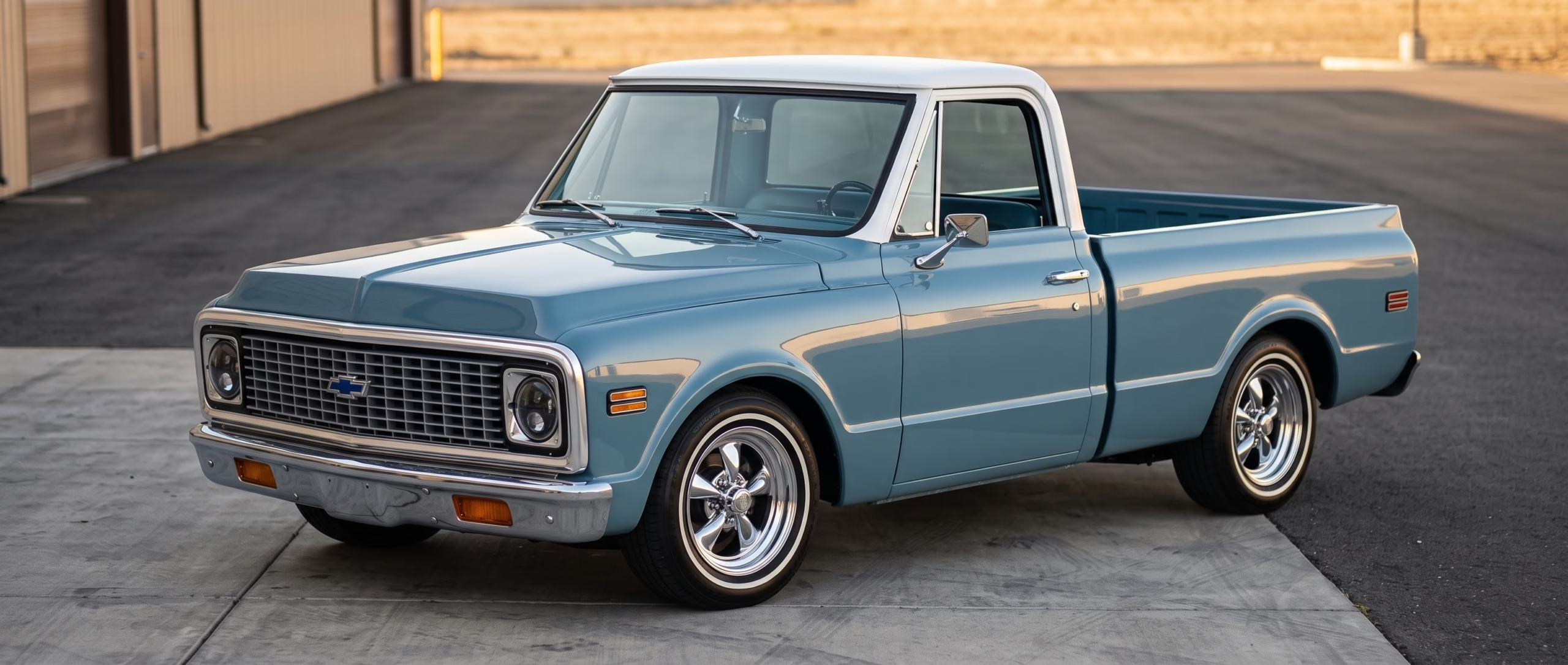
Hot August Nights just wrapped. Now do the work behind it.
Every year, the last week of July and the first week of August in Reno is a rolling festival of American car culture — six thousand registered classic vehicles, the 40th anniversary edition of Hot August Nights, restored muscle cars, hot rods, and above all, classic pickups. Chevy C-10s, Ford F100s, squarebody GMCs, all built between the mid-1960s and the mid-1980s. The look they share is not accidental. It's the product of a specific piece of specialty auto body work — frame shortening — that transforms a long-bed pickup into a proper short-bed street classic.
Rippers has been doing this work for 22 years. Our body shop opened in West Sacramento in 1964, and in 2004 we added frame shortening and short bed conversion as a dedicated specialty. Since then we've converted dozens of classic trucks — C-10s, GMCs, F100s — from long-bed configurations to short-bed, typically shortening the wheelbase by 14 inches through custom structural engineering, precision welding, and full mechanical reintegration.
This week's post walks through one of those projects — a 1972 Chevy C-10 that came to us as a long-bed and left our shop six weeks later as a completed short-bed conversion with new paint, updated suspension, and a 5-year warranty on the structural work. The purpose is not just to show off the truck. It's to answer the questions we hear most from truck owners considering this work: what is frame shortening actually, what does the process look like, why must it be done by a professional, and what does it cost in time and structural commitment.
The specialty work that gives a classic truck its proportions.
Frame shortening is a specialty auto body service that converts a classic pickup truck from a long-bed configuration to a short-bed configuration by sectioning the truck's steel frame, typically shortening the wheelbase by 14 inches. The bed is removed, the frame is cut and rewelded with custom structural bracing, the driveshaft is shortened, brake and fuel lines are rerouted, and the suspension is realigned. It is a structural modification, not a cosmetic one, and it must be done by a professional body shop with the right welding equipment and engineering knowledge.
For GM classic pickups — the Chevrolet C-10 and its GMC equivalent across the 1960-72 first-generation trucks and the 1973-87 squarebody second-generation trucks — the standard difference between the long-bed and short-bed configurations is exactly 14 inches. GM built both configurations during those years; the long-bed was the more utilitarian workhorse, and the short-bed was the more stylish half-ton pickup often chosen for personal use. The short-bed's tighter proportions and shorter wheelbase gave it the specific stance that hot-rod culture picked up on and never let go of.
GM built long-bed and short-bed C-10s side by side during the same production years. The mechanical difference between the two configurations is exactly 14 inches of wheelbase — the length of the frame section that gets removed in a conversion.
Why owners want the short-bed configuration
There are three reasons the short-bed conversion has stayed the single most popular custom modification in the classic-truck world for six decades running. The first is visual proportion. The short-bed's tighter wheelbase matches the cab-to-bed ratio that classic-truck culture treats as the aesthetically correct configuration. It looks like a hot rod because it is the hot-rod proportion.
The second is handling. A shorter wheelbase changes the truck's dynamics — tighter turning radius, quicker response, better weight distribution for the small-block or big-block V8 engines these trucks were built around. These trucks were never sports cars, but a well-shortened classic pickup handles meaningfully differently than its long-bed twin.
The third is collector value. Short-bed configurations of the popular classic-truck years have consistently commanded higher resale values than long-beds since the mid-1990s. A properly documented, structurally sound conversion — performed by a shop that stands behind the work — adds real market value to a classic truck that will likely be resold in the collector market someday.
A running long-bed with good bones and a specific goal.
The truck came in as a running long-bed C-10 with an original 350 small-block, mostly straight body panels, and a bed floor that had earned its rust after 54 years in Northern California. The owner had bought it from a second owner who'd used it for years as a daily driver and light work truck. The engine was healthy. The frame was straight. The plan, from the first consultation, was clear: convert to short-bed configuration, refresh the paint, update the suspension, and finish with a look that respected the truck's era rather than trying to modernize it.
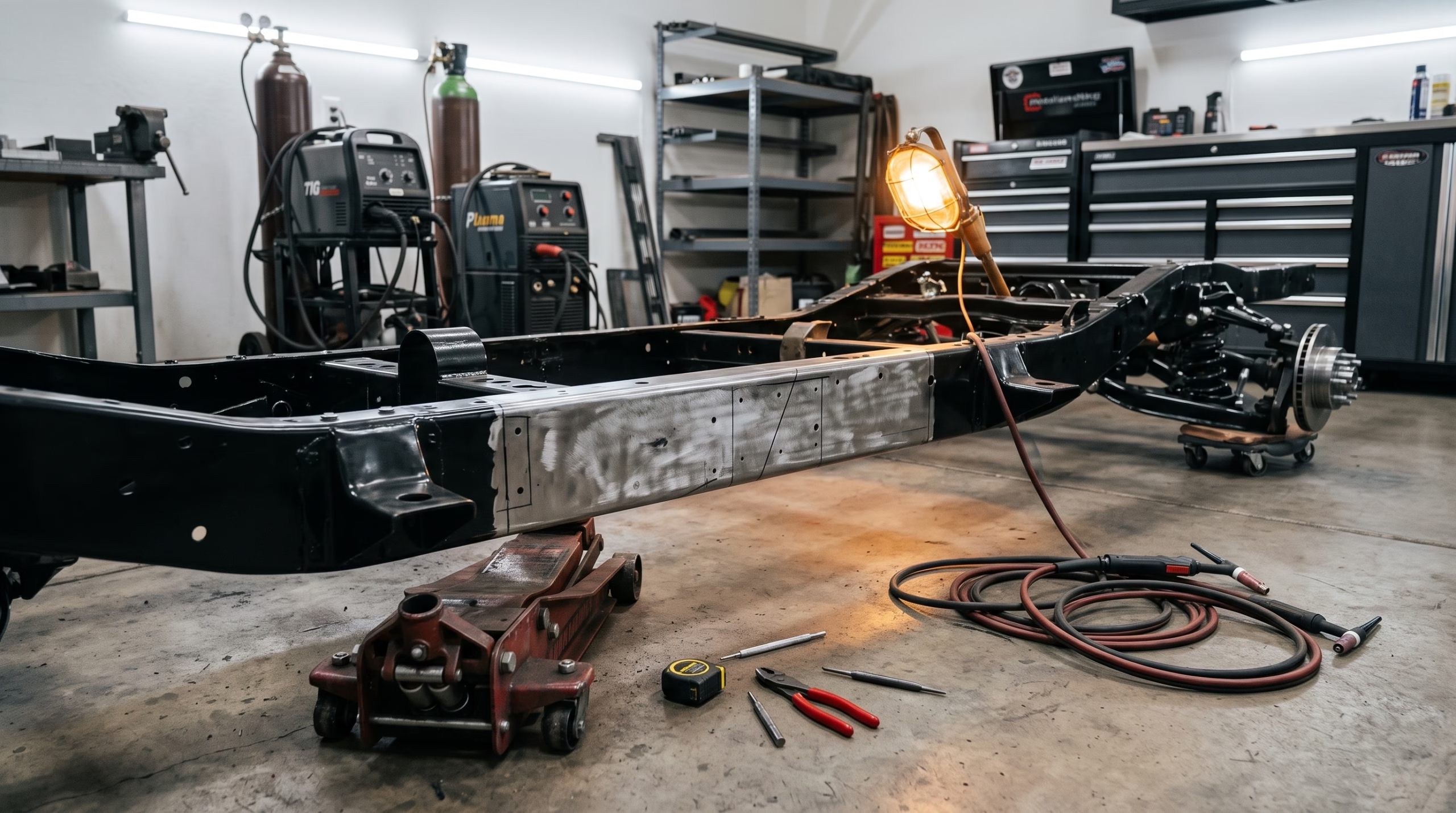
With the goal set, we scheduled the disassembly for a Monday morning. The bed came off first, then the fuel tank was drained and disconnected, brake and fuel lines were traced and marked for later reintegration, and the frame was cleaned to bare metal in the sections that would be modified. We measured twice, checked measurements against our engineering plan, and made the two cuts that would remove the 14-inch section.
The next four weeks were the real work. Custom structural sections engineered specifically for the 1972 C-10's frame geometry. Precision welding with OEM-grade materials. Driveshaft shortened to spec by a specialist driveshaft shop we've worked with for years. Brake lines and fuel lines rerouted. Suspension geometry realigned. Bed refitted onto the new wheelbase. Then paint — a light blue that matches the original 1972 factory options — interior refresh, and full safety inspection and structural certification before the truck left the shop.
How a frame shortening actually gets done.
The process below is what Rippers follows for every long-bed-to-short-bed conversion. Timelines vary by scope — frame work alone can be as short as three weeks; a full conversion with paint and interior typically runs six. What doesn't vary is the sequence and the engineering standards.
Consultation and design
We walk through your truck — year, model, current condition, powertrain, frame geometry — and talk through what you want the finished proportions to look like. Every truck is different; we don't use one-size-fits-all templates. Consultations are free and can happen at the shop or by phone, and we typically follow up with a written project scope and timeline within a few days.
Structural engineering
Once the scope is agreed, we engineer the custom frame sections specifically for your truck's make, model, and configuration. This is the step that separates a professional conversion from the DIY-kit versions available online. Off-the-shelf kits assume a standard frame geometry that many classic trucks have drifted from over decades of use, repair, and prior modification. Custom engineering accounts for what your truck actually is today, not what it was when it left GM's assembly line.
Disassembly and fabrication
The truck comes into the shop. Bed is removed. Fuel tank is drained and disconnected. Brake and fuel lines are marked and detached. Frame is cleaned to bare metal in the sections being modified. The two cuts are made, the 14-inch section is removed, and the new custom sections are welded in place with the specified pattern. Driveshaft is sent to a specialist for shortening. Brake and fuel lines are rerouted for the new wheelbase.
Assembly, paint, and certification
Frame is reassembled with precision alignment. Suspension is updated (new bushings, refreshed shocks or springs if scoped). Bed is refitted onto the new wheelbase. If paint is in scope, prep work begins in parallel with reassembly — sanding, priming, color coats, clear coats. Interior work happens alongside. Once mechanical reassembly is complete, we run the truck through our full safety inspection and structural certification process. Every truck leaves the shop with structural documentation and our 5-year warranty on the structural work.
The community this work belongs to.
Classic-truck culture is one of the most durable communities in American car enthusiasm. It's grown, not shrunk, over the last two decades — and much of that growth has been around the specific truck years and configurations that frame shortening applies to. The 1960-72 Chevrolet C-series and its GMC equivalent. The 1973-87 squarebody trucks. The 1967-72 Ford F-series. These are the trucks you see in restoration magazines, on truck club runs, and every year at Hot August Nights, where classic pickups are consistently one of the largest single categories of registered vehicles.
Hot August Nights is the most visible celebration of this culture, but it's one weekend a year. The community around these trucks runs year-round through local truck clubs, cars-and-coffee gatherings, restoration forums, and shows. Northern California has an especially deep classic-truck scene — the climate is kind to steel, the roads reward the specific handling character of these trucks, and Sacramento in particular sits close enough to Reno's Hot August Nights that the same community shows up at both events.
The work we do at Rippers on frame shortening is for this community. Not just our customers — the whole community. Every properly shortened, structurally sound classic truck that leaves our shop and shows up at a cruise-in or club run reinforces the standard for what this work should look like. Every truck done wrong — DIY kit welded up by someone who didn't understand frame geometry, or a shop that cut corners on the engineering — damages the reputation of the specialty as a whole.
We stand behind our structural work for five years because we know what good work looks like, and because a classic truck built to keep is worth the standard.
Questions we hear about frame shortening.
What is frame shortening on a truck?
Frame shortening is a specialty auto body service that converts a classic pickup truck from a long-bed configuration to a short-bed configuration by sectioning the steel frame, typically shortening the wheelbase by 14 inches. It is a structural modification that also requires driveshaft shortening, brake and fuel line rerouting, and suspension realignment. It must be performed by a professional body shop with the right welding equipment and structural engineering knowledge.
How long does a frame shortening take?
A complete long-bed to short-bed conversion at Rippers Body Shop typically takes about six weeks from initial disassembly through paint and safety certification. Frame work alone, without paint or interior work, can be as short as three weeks. The exact timeline depends on the scope of the project and whether we encounter any unexpected rust or prior modifications during disassembly.
Is it safe to shorten a truck frame?
Yes — a properly performed frame shortening is fully safe and structurally sound. What makes it safe is the engineering: custom frame sections designed for your specific truck, precision welding with OEM-grade materials, proper suspension realignment, and safety certification. What is not safe is DIY frame work performed without the right welding equipment, without structural engineering, or by shops that cut corners on materials or inspection. Every Rippers frame shortening includes a 5-year structural warranty and post-work safety inspection.
Which trucks can be shortened?
The most common candidates for long-bed to short-bed conversion are 1960-1972 Chevrolet and GMC C-series trucks, 1973-1987 GM squarebody trucks, and 1967-1972 Ford F100 trucks. Half-ton and three-quarter-ton trucks under 8,200 pounds GVWR are typically eligible. Heavier-duty trucks require case-by-case engineering evaluation. Rippers offers free consultations to determine eligibility and scope for any specific truck year, make, and model.
Can I do a short bed conversion myself?
DIY frame shortening kits are available online, but we do not recommend attempting this work without professional welding equipment and structural engineering knowledge. Frame welds carry the entire load and safety of the vehicle; a weld that looks correct but wasn't done to structural standards can fail over time in ways that are difficult to detect until they cause serious damage. The cost of professional work reflects the engineering, materials, equipment, and certification required to do it right.
Where can I get frame shortening done in Sacramento?
Rippers Body Shop performs classic truck frame shortening and short bed conversions at our West Sacramento location. We have specialized in this work since 2004 and have been a family-owned body shop since 1964. We serve customers throughout West Sacramento, Sacramento, Davis, Woodland, and the greater Sacramento region. Consultations are free. Contact us by phone at (916) 372-5353 or through the chat on rippersbodyshops.com.
Free consultation. Straight answer.
If you have a classic truck you're thinking about converting — long-bed to short-bed, custom frame work, full restoration — the first conversation costs nothing. We'll walk through your truck, ballpark the timeline and cost, and give you a straight answer on what's involved and what isn't. Truck club members welcome. Multi-vehicle inquiries welcome. We answer the phone during shop hours, and website chat covers evenings and weekends.
See the Service Page Or start a chatDirect line: (916) 372-5353 · 2435 W Capitol Ave, Suite E, West Sacramento, CA
Continue with the August blog series.
This is Week 1 of the August three-part blog series. Next week's post shifts focus from specialty work to what most Sacramento drivers actually need to know when something goes wrong. And the final post gives you the evergreen guide to picking the right shop.
- 08.19.2026Week 1 · Custom Work
Frame Shortening a 1972 Chevy C-10
The 14-inch conversion that transforms a long-bed truck into a proper street classic. Step-by-step through Rippers' six-week process.
- 08.20.2026Week 2 · What To Do
The First 24 Hours After a Car Accident in California
Step-by-step: what to do at the scene, what to say (and what not to say) to insurance, how to document damage, and when to get an independent repair estimate.
Publishes Aug 20 → - 08.27.2026Week 3 · How To Choose
How to Choose an Auto Body Shop in Sacramento
Certifications that matter, questions to ask, red flags to watch for, and how to compare estimates without getting burned.
Publishes Aug 27 →
CA BAR Automotive Repair Dealer Reg. ARD #294466
Frame shortening and short bed conversion services are project-based and quoted individually after consultation; the 5-year structural warranty applies to Rippers' frame welding and structural work on completed projects. Hot August Nights is an event of Hot August Nights, Inc., not affiliated with Rippers Body Shop. All customer-pay services are quoted in writing before work begins.