


Cold Gets the Blame.
Heat Did the Damage.
The counterintuitive science of Sacramento battery failure — why summer, not winter, is when your battery actually dies. Plus when to test, when to replace, and how to catch a failing battery before August makes you jump-start it in a parking lot.
"My battery died because it got cold." — Almost every car owner, forever. And they're mostly wrong.
We've heard the same story for sixty-two years. Someone comes in on a January morning with a dead battery, and they tell us the cold snap killed it. That's the story on the news. That's what the neighbor said. It feels true because it's when the failure happened.
But the failure didn't happen in January. It happened in July. Cold weather doesn't kill car batteries — it exposes the batteries that summer already killed. The counterintuitive science of automotive batteries is that heat is the actual enemy, and Sacramento, tucked into the Central Valley with 30+ days a year over 100°F, is one of the hardest environments in California for a battery to survive.
Here's the science, why Sacramento is particularly brutal, the six warning signs your battery is telling you it's on the way out, and the voltage numbers that tell you whether to test, watch, or replace.
Why heat is the actual killer.
A car battery is a chemical device. Inside, lead plates sit in a sulfuric acid electrolyte and generate electricity through a chemical reaction. Like all chemical reactions, this one obeys a basic rule: heat accelerates the reactions. And in a battery, accelerated reactions don't just mean more power — they mean faster wear on the components doing the reacting.
The 10-degree rule
There's an old rule of thumb in battery chemistry called the Arrhenius principle: for every 10°C (18°F) increase in temperature above the ideal 77°F, battery aging roughly doubles. A battery operating at 95°F is aging twice as fast as it should. At 113°F, four times as fast. And under the hood of a car in a Sacramento parking lot at 2 p.m. in July, ambient temperatures can hit 140°F or higher — the battery is aging six to eight times faster than the manufacturer's rating assumes.
Three ways heat wrecks a battery
Grid corrosion. The positive lead plates inside the battery corrode faster at high temperatures. Corroded plates can't hold or deliver charge as effectively. This is the biggest single reason batteries fail early.
Electrolyte loss. In flooded lead-acid batteries (still the most common type), heat evaporates the water content of the electrolyte. Once water level drops below the plates, those plates are permanently damaged. AGM batteries handle this better but aren't immune.
Plate sulfation. Heat and repeated cycling accelerate the formation of lead-sulfate crystals on the plates. These crystals reduce the plates' ability to accept or deliver charge, and once they harden, they're difficult or impossible to reverse.
Heat is termites. Cold is the earthquake. Termites destroy the house all summer without you noticing. The earthquake in winter is what finally brings it down — but the wood was already rotten. That's your battery, every year, in Sacramento.
So why does cold seem to kill it?
Two things happen when temperatures drop. First, cold reduces the battery's ability to deliver current — a healthy battery loses about 20% of its capacity at 32°F, and 50% at 0°F. Second, cold engines require more current to start (thicker oil, harder-to-crank cylinders). So the same battery that quietly limped through November suddenly can't clear the higher bar of a 25°F winter start. The failure happens in January. The wear happened in July.
Sacramento is particularly hard on batteries.
The Battery Council International — the industry group that tracks warranty and replacement data — has been publishing climate-related battery lifespan numbers for decades. The pattern is consistent every year, and the gap between hot and moderate climates is dramatic:
A battery that would last 5 years in Portland lasts 3 years in Sacramento. Same battery. Same manufacturer. Same rating. Different climate. If you moved here from somewhere cooler and you're on your usual 5-year replacement cadence, you're getting caught by surprise every couple of summers — because the cadence that worked back east doesn't work in the Central Valley.
Under-hood heat is worse than ambient
On a 105°F Sacramento afternoon, the ambient temperature at the battery under a closed hood — after a highway drive at engine operating temperature — can climb to 150°F to 180°F. Every hour of that is accelerated wear. Cars that spend summer days in garages or shaded carports fare noticeably better; cars that live in office parking lots or open driveways get the worst of it.
AGM vs flooded — some difference, not enough
Absorbed Glass Mat (AGM) batteries, which are standard equipment in most vehicles built after about 2015, handle heat somewhat better than traditional flooded batteries — sealed design, no free electrolyte to evaporate, more heat-resistant separator materials. In Sacramento, that translates to maybe 6 to 12 months of additional lifespan on average. Better. Not immune. If your car has an AGM battery and it's four years old, you're still in replacement-consideration territory.
Six things your dying battery is trying to tell you.
Batteries fail progressively. In the weeks before a "sudden" failure, they almost always show at least one of these six signs. Any single one is worth a free test. Two or more, book service this week.
01 · Slower engine crank
The engine takes noticeably longer to catch when you turn the key or press start. Half a second becomes a full second. A full second becomes two. Your ear notices before your brain does.
02 · Dashboard lights dim during startup
When you crank, the interior lights, dashboard, or headlights dim more than usual. The battery is delivering less current under the starter load than it should.
03 · Electronic resets
The clock resets to 12:00. Radio presets disappear. Seat memory forgets. These are signs the battery is dropping low enough during startup to briefly interrupt memory power.
04 · Battery light on the dash
The battery-shaped warning light comes on and stays on — sometimes intermittently. Sometimes it's the alternator, sometimes it's the battery, but either way, it's a shop visit today.
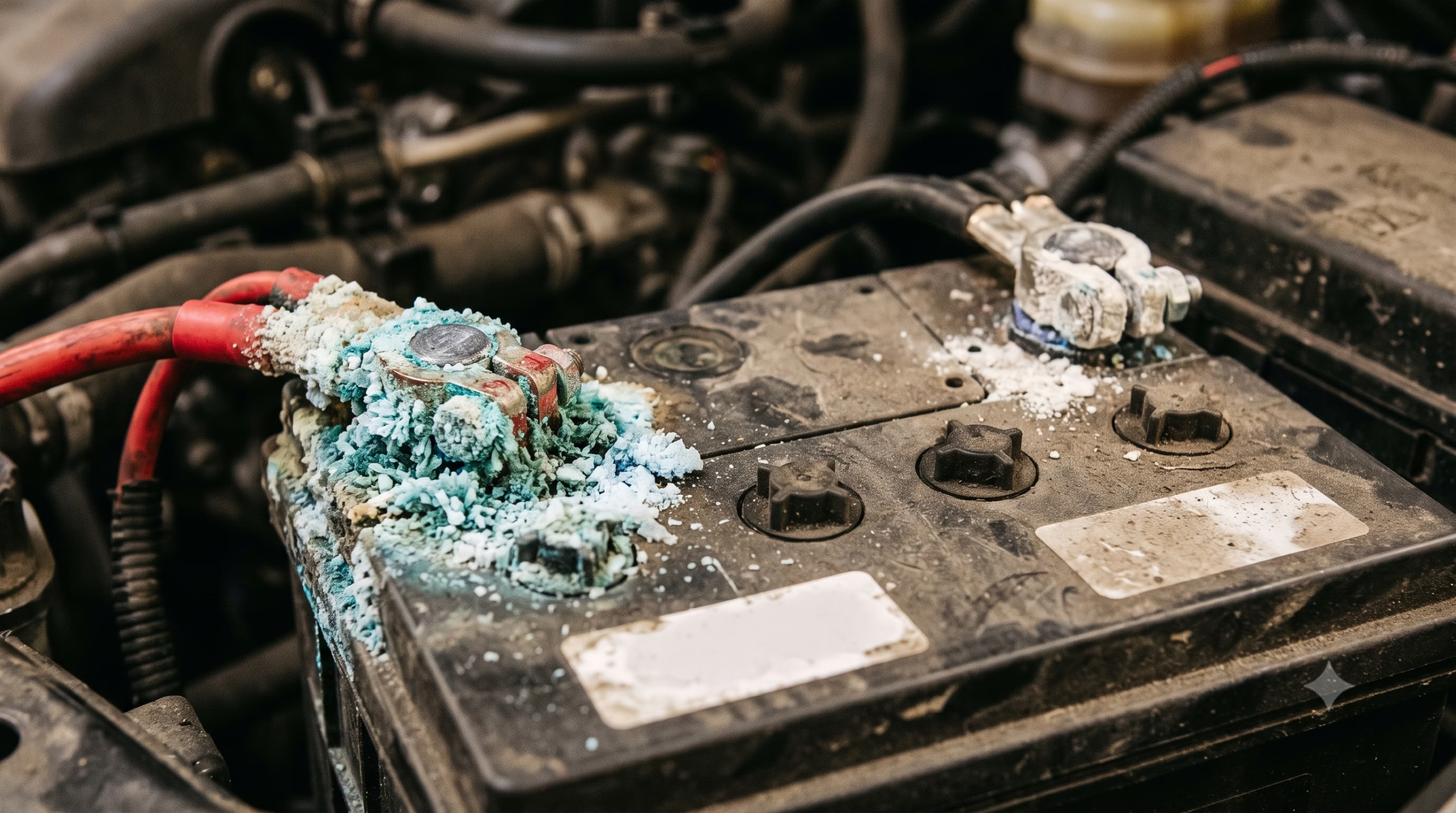
05 · Corrosion on the terminals
Blue-green or white crystalline buildup around the battery posts. Common with heat-related electrolyte loss. Cleanable, but a symptom of a battery that's been running hot.
06 · Rotten-egg smell — call today
A sulfur or rotten-egg smell from under the hood means the battery is off-gassing hydrogen sulfide, usually from overcharging or internal damage. This one's a safety issue. Replace immediately.
When to test. When to replace.
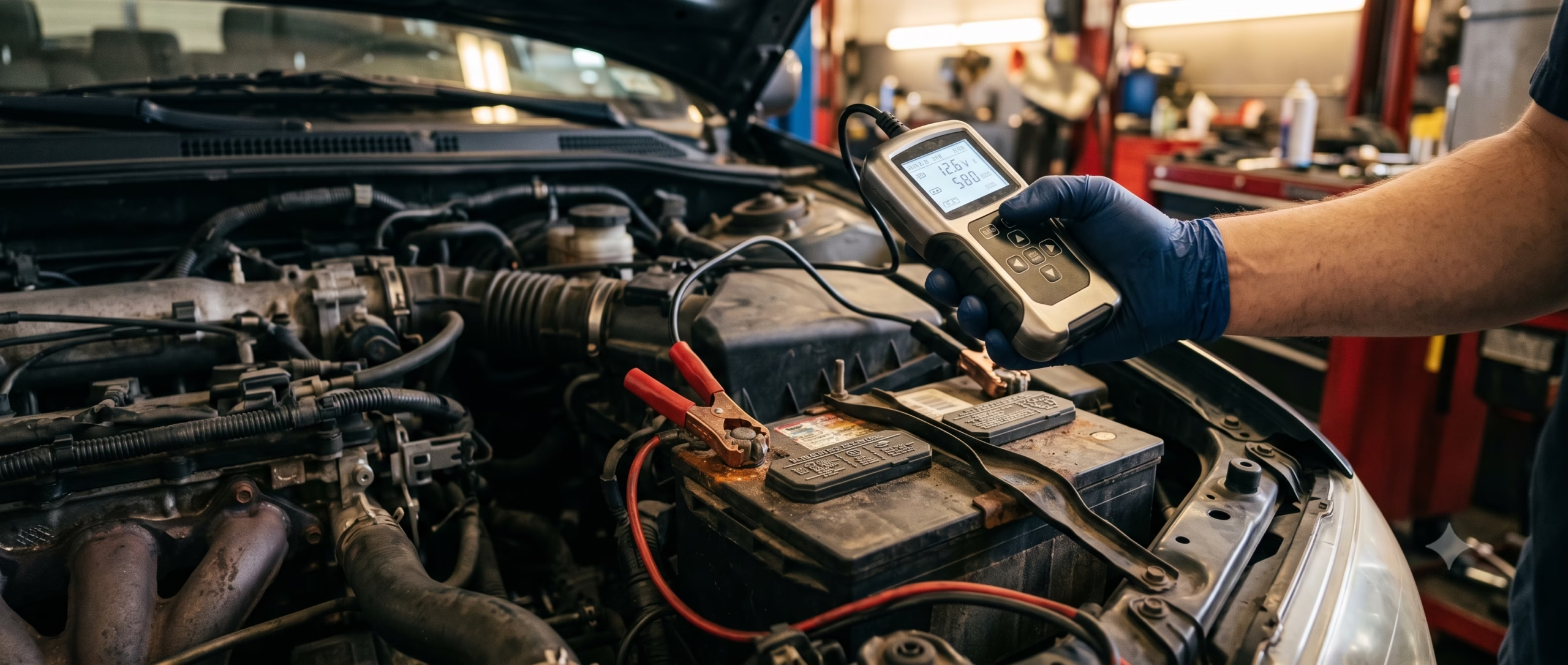
Battery health can be measured with confidence in about thirty seconds using a digital battery analyzer — the kind of tool any auto parts store, dealership, or repair shop has on the counter. Testing is nearly always free. Refusing a test on a summer-aged battery is one of the more expensive small decisions you can make.
When to test
Every six months if you're in Sacramento. Twice a year is enough — once before summer (May or June, when the battery has come through winter), and once heading into fall (September, when the battery has just endured peak heat). Any time the battery is 3+ years old. Any time you notice one of the six signs above. Any time you get a new battery installed, ask them to write the install date on the top of the case with a marker — you'll thank yourself in three years.
The voltage thresholds that matter
These are the numbers a healthy battery should show on a multimeter at rest — meaning engine off, all electronics off, at least an hour after the car was last driven. If you own a multimeter, this is a two-minute check you can do at home:
- 12.6V + Healthy Fully charged and functional. Retest in six months.
- 12.4 – 12.6V Watch Slightly discharged or partially aged. Charge fully and retest in a week; if it doesn't hold, the battery is aging.
- 12.0 – 12.4V Weak Marginal. Consider a load test at a shop. Replacement likely within the next 6 months.
- Below 12.0V Failing Battery is either deeply discharged, damaged, or at end of life. Replace this week.
The load test tells you more
Voltage at rest is a snapshot. A load test — where a shop applies a controlled electrical load to the battery and watches how it responds — is the definitive health check. On a load test, a healthy battery holds voltage above 9.6V for 15 seconds under load. A failing battery drops below that. Any Rippers appointment includes a free battery load test if you ask.
When to just replace
Age is the honest tie-breaker. In Sacramento, if your battery is 4+ years old, the math is almost always on the side of replacement. Even if today's test comes back marginal, you're inside the window where failure is more likely than not before next summer. Replacement cost typically runs $150 to $300 for a standard flooded battery and $200 to $400 for AGM, plus $30 to $80 for professional installation on most vehicles (some newer cars require battery registration with the vehicle computer — that's an additional service).
Two minutes now. Three years of peace of mind.
Free battery test at Rippers, no appointment necessary for the test itself. Bring the car in on any weekday and we'll run a full voltage and load test with our digital analyzer, tell you the current state of the battery, and give you a straight answer on whether it needs to be replaced. If it does, replacement runs $150 to $400 depending on your vehicle's battery type. If it doesn't, we'll write the install date on the case for you and note when to retest.
Get a Free Battery Test or call (916) 372-5353Also worth reading: the July newsletter has our A/C service special that runs through July 31, plus six peak-summer heat safety habits. Battery tests happen any time we've got the car in.
More from July.
- Jul 9
R-134a vs R-1234yf: The Refrigerant Story
Read July 9 → - Jul 16
Six Warning Signs Your A/C Is About to Fail
Read July 16 → - Jul 23 · You are here
Heat, Not Cold, Is What Kills Car Batteries
- Jul 30 · Up next
August Is Coming: A Peak-Summer Prep Guide
Read July 30 →
Quick answers, in one sentence each.
Does heat really kill car batteries?
Yes — heat is the primary factor that shortens automotive battery lifespan, not cold. Following the Arrhenius principle, battery chemistry roughly doubles its rate of wear for every 10°C (18°F) above the ideal 77°F. Under-hood temperatures in Sacramento summer regularly reach 150-180°F, causing accelerated grid corrosion, electrolyte evaporation, and plate sulfation. Cold weather doesn't kill batteries — it exposes the damage summer already did.
How long do car batteries last in hot climates like Sacramento?
Automotive battery lifespan in hot-climate regions like Sacramento typically runs 30 to 36 months, compared to 48 to 58 months in moderate climates. That's roughly 40% shorter service life on the same battery. AGM batteries typically extend Sacramento lifespan by 6 to 12 months over flooded lead-acid batteries but do not eliminate the effect. Cars stored in garages or carports fare noticeably better than those parked in open driveways or parking lots.
What are the signs of a dying car battery?
The six most common warning signs are: slower engine cranking than usual, dashboard or interior lights dimming during startup, electronic resets of the clock or radio presets, a battery warning light on the dashboard, corrosion buildup on the battery terminals, and a sulfur or rotten-egg smell from under the hood. The last one is a safety issue and warrants immediate replacement. Any of the others is worth a free battery test.
How often should I test my car battery in Sacramento?
In Sacramento's hot climate, twice a year is the standard cadence: once before summer (May or June) and once heading into fall (September). Additionally, any time the battery is 3+ years old, or any time you notice one of the common warning signs. Battery testing takes about 30 seconds with a digital analyzer and is free at most auto parts stores, dealerships, and repair shops. Writing the install date on the top of the battery case makes future testing decisions much easier.
How much does a new car battery cost in Sacramento?
A standard flooded lead-acid car battery in Sacramento typically costs $150 to $300 installed; an AGM battery typically costs $200 to $400 installed. Some newer vehicles require battery registration with the vehicle's computer after installation — this is an additional service and adds $30 to $80. Premium AGM batteries for European luxury vehicles or vehicles with dual-battery systems can run higher. Free battery installation is common when the battery is purchased from the shop that installs it.
CA BAR Automotive Repair Dealer Reg. [ARD #294466 ]
This article describes general automotive battery science and typical warning signs for educational purposes; it is not a substitute for professional battery testing on any specific vehicle. Voltage thresholds cited reflect industry-standard reference points published by the Battery Council International and similar bodies. Pricing ranges reflect typical Sacramento-market rates and vary by vehicle make, model, and battery type. Battery tests at Rippers are complimentary; all customer-pay services are quoted in writing before work begins. See the rest of the series and our July 2026 newsletter for more.