


When to Pay
for a Pre-Purchase
Inspection.
Five situations when a $150–$250 pre-purchase inspection saves you thousands — and a few honest cases when you can skip it. The series finale.
Three episodes have shown you what to look for. This one shows you when to stop looking yourself.
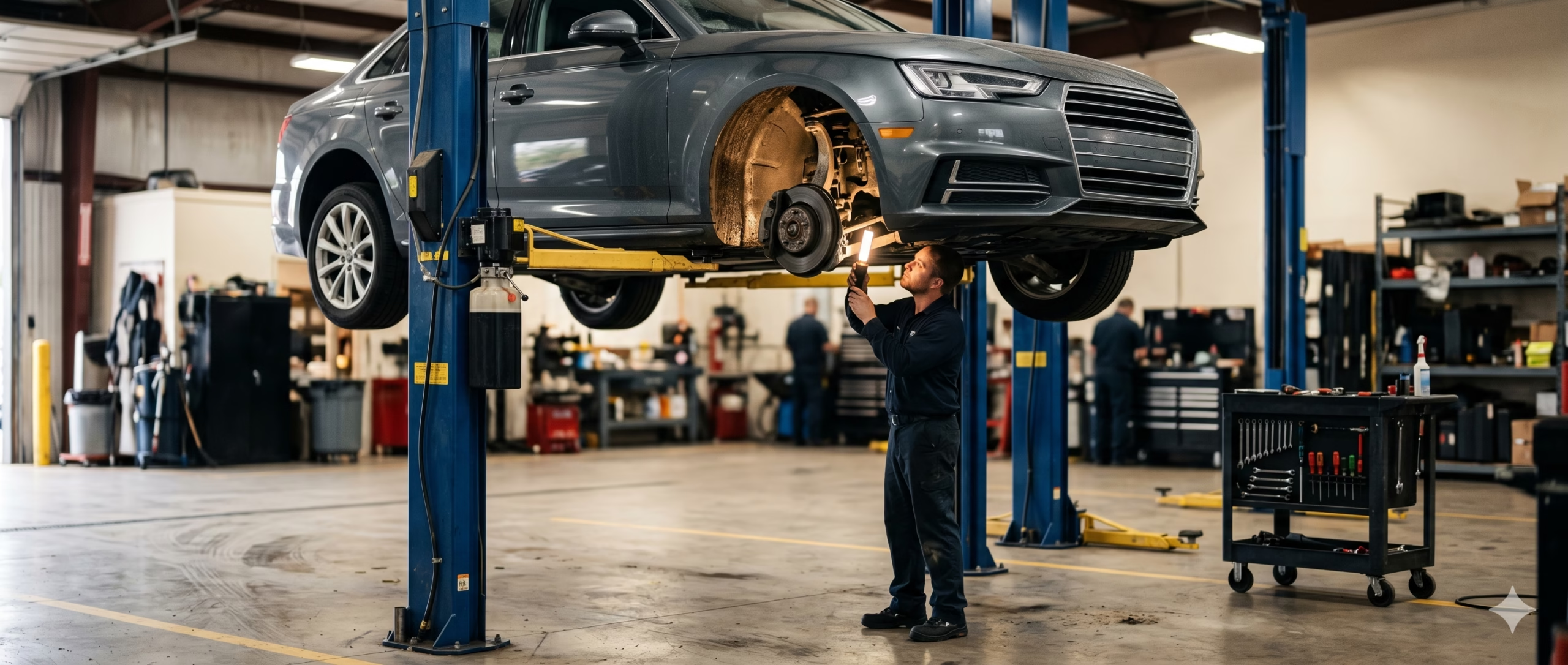
A used-car walkaround can catch a lot. You can spot paint texture differences in sunlight (Episode 1). You can read mismatched paint and blend lines (Episode 2). You can find structural evidence in five specific places (Episode 3). But there's a hard limit to what any buyer can see in a parking lot, no matter how sharp their eye is. The underbody, the inside of the doors, the back of the radiator support, the welds that hide behind the wheel-well liners — those need a lift, lights, and a paint depth gauge.
A pre-purchase inspection (PPI) is what turns "this car looks fine" into "this car is fine, here's the written report." For about $150 to $250 in the Sacramento market, a body shop will put the car on a lift, check every panel for thickness with a gauge, document the structural members, and email you a report with photos. This article walks through the five situations when that spend pays for itself many times over — and the handful of situations when you can honestly skip it. Start with Episode 1 ↗
When you can honestly skip the PPI.
We'd rather lose the $200 booking than have you spend it on a car where the math doesn't work. There are real cases when you can confidently skip the inspection. There are more cases when you really shouldn't. Here's both sides, on one screen:
Skip it when
- You're buying a sub-$3,000 beater you plan to drive into the ground and replace within a year.
- You're buying directly from a longtime friend or family member who can document the full ownership history.
- You're buying a current-generation Certified Pre-Owned car still under factory warranty — your protection already exists.
- The car has been independently inspected by another reputable body shop within the last 30 days and you've read the report.
- The asking price is so low that even significant hidden problems wouldn't change your decision.
Don't skip it when
- The car is over $10,000 and you found any of the signs in Episodes 1–3.
- You're buying private-party — Marketplace, Craigslist, OfferUp, or a friend-of-a-friend.
- You're buying sight-unseen from out of state.
- The car is 5+ years old and looks suspiciously clean.
- The seller is reluctant to let you take the car for an hour. (That alone is a red flag.)
You're buying anything over $10,000.
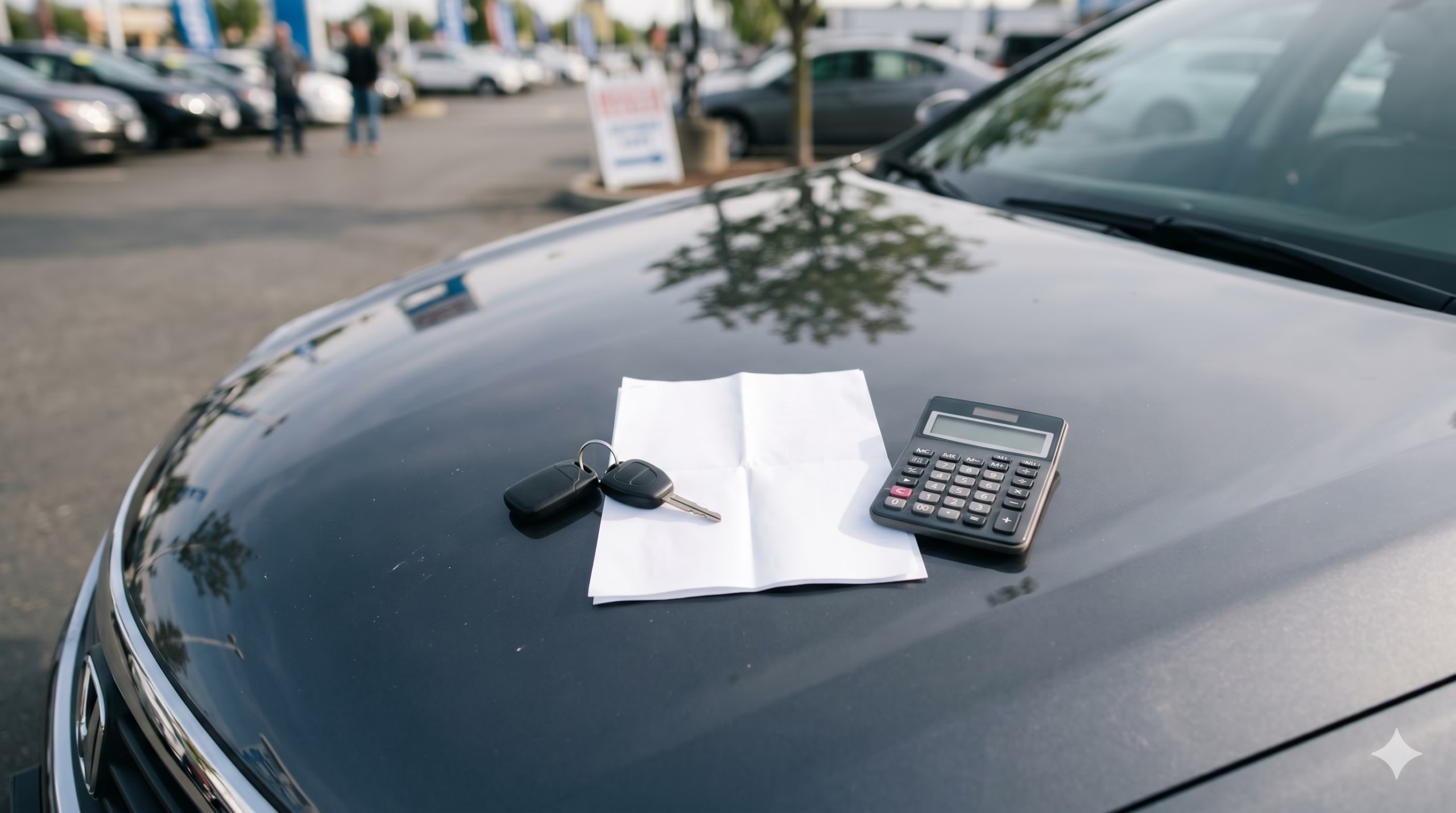
At a $10,000 purchase, a $200 inspection is 2% of the price. At $20,000, it's 1%. At $30,000, it's well under 1%. Meanwhile, the hidden damage a PPI typically catches on cars in those price ranges — undisclosed structural repair, deferred mechanical maintenance, paint and panel issues, leaks, alignment problems — routinely runs $3,000 to $10,000 to fix or to negotiate down from the asking price.
For most buyers, this is the single threshold that matters. Below $10K, the math gets thinner because even significant problems might not justify the inspection fee. Above $10K, the math gets overwhelming — especially as price climbs.
If you're financing the car, your lender's loan officer is going to ask if you've had it inspected. Plan to be able to answer "yes."
You're buying private-party. No dealer, no warranty, no return.
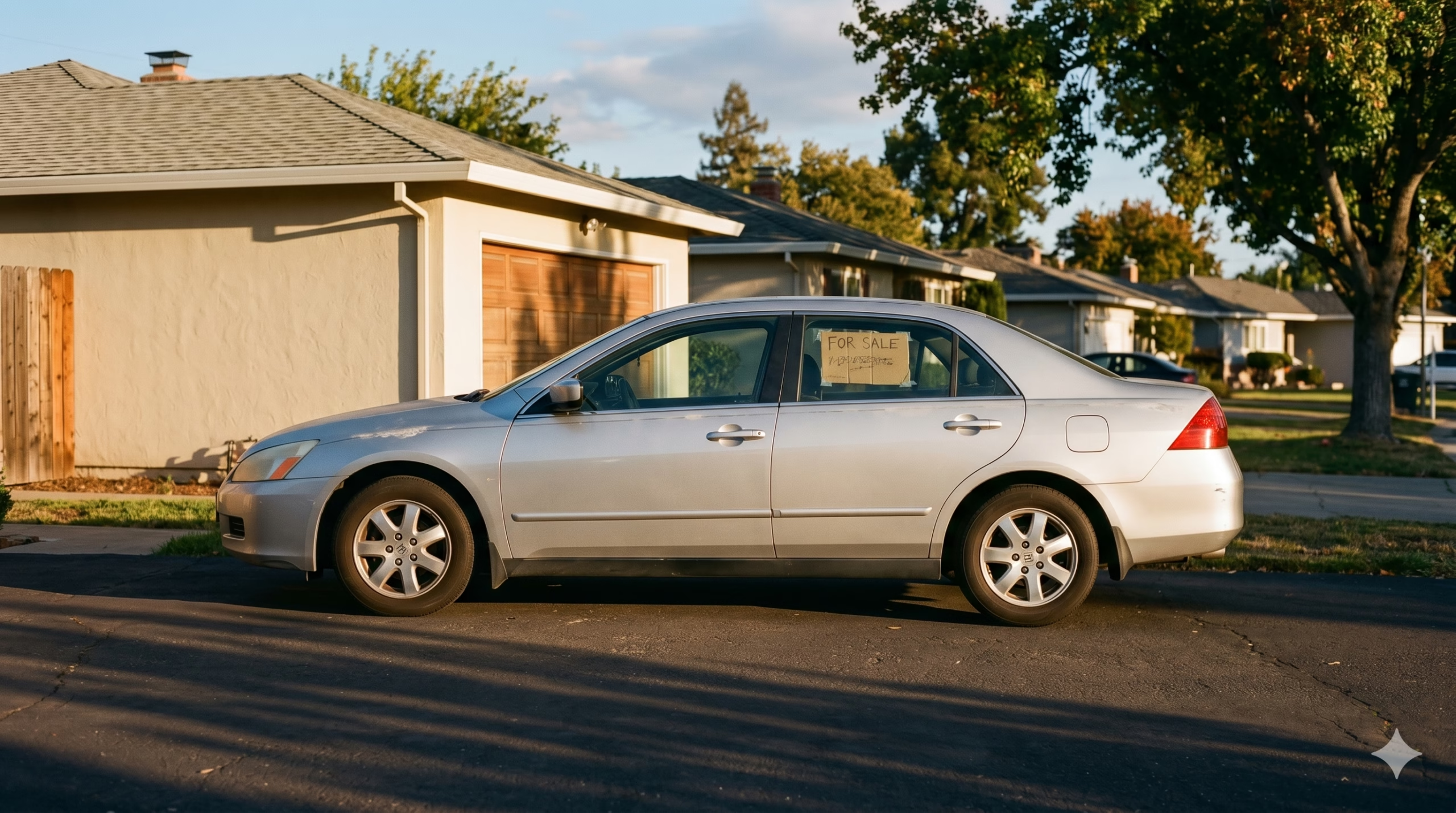
Facebook Marketplace, Craigslist, OfferUp, neighborhood word-of-mouth — these are great places to find a used car at a fair price, and they're also where buyers have essentially zero legal recourse after the sale. California's lemon laws don't apply to private-party sales the way they apply to dealer transactions. "As-is" means exactly that. Once you transfer funds, you own whatever's wrong with the car, regardless of what the seller disclosed (or didn't).
A PPI is the only protection you actually have. It gives you something the seller doesn't: an independent, professional opinion before you sign. And if the seller refuses to let the car be inspected — that's its own answer, and you should walk.
No dealer means no buffer. The inspection is the buffer.
The car is 5+ years old and looks suspiciously perfect.
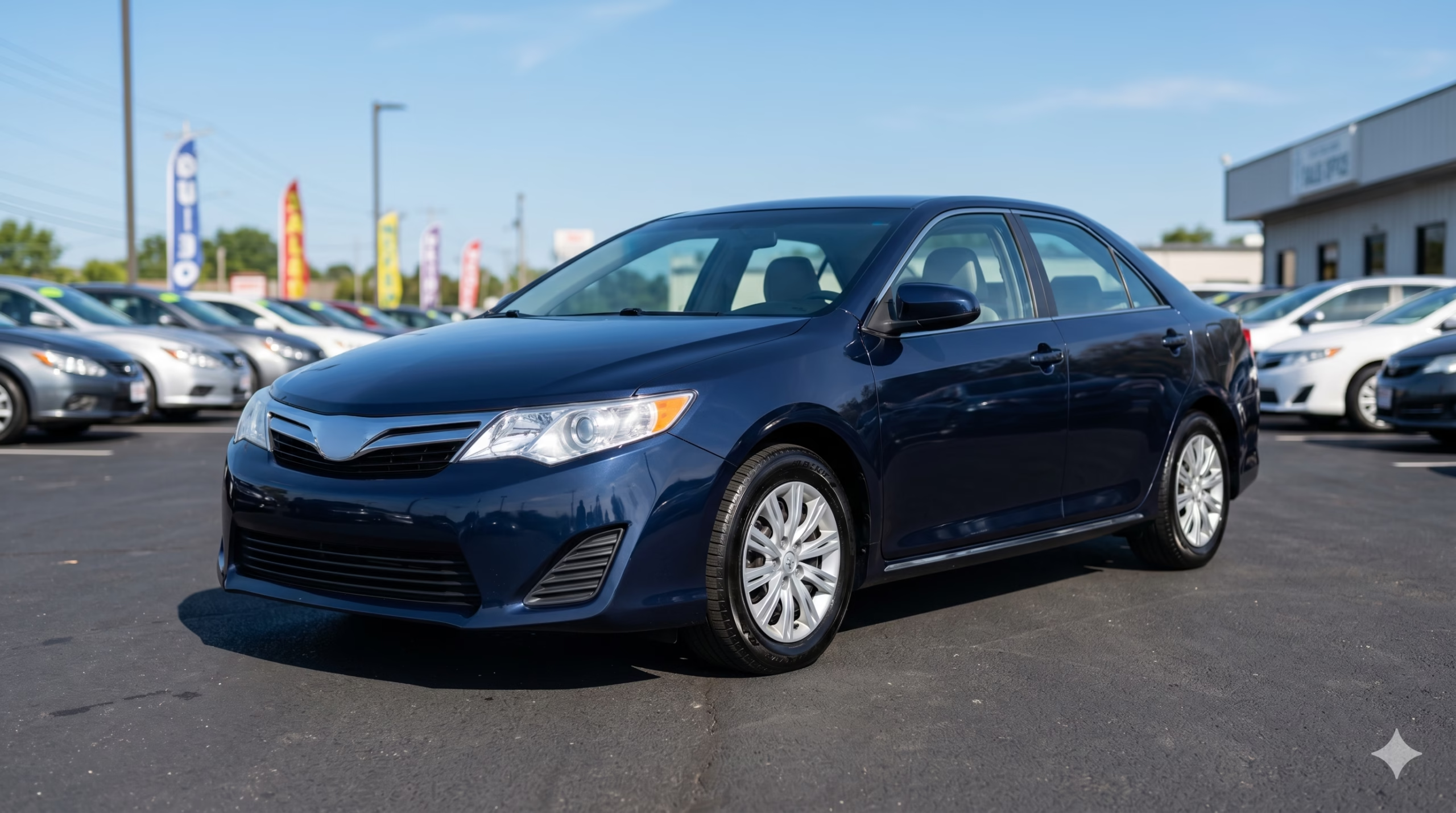
A six-year-old daily driver should show six years of life. Some rock chips on the leading edge of the hood. Faint headlight yellowing. Wheel-well stone marks. Small parking-lot scuffs on the bumpers. A completely pristine older car is either an outlier — garaged its whole life by a meticulous owner — or it's been recently refurbished to hide a story. Both possibilities exist, but only one is good news for you.
This is the classic case where the car looks better than it should for its age, and a PPI tells you which scenario you're in. Paint depth gauges are decisive: factory paint on a six-year-old car reads 4–7 mils; recently refinished paint reads 8–15 mils or more. The gauge can't be charmed.
"Looks brand-new for its age" is either a unicorn or a cover story. The inspection separates them.
You're buying out of state. You can't walk the lot yourself.
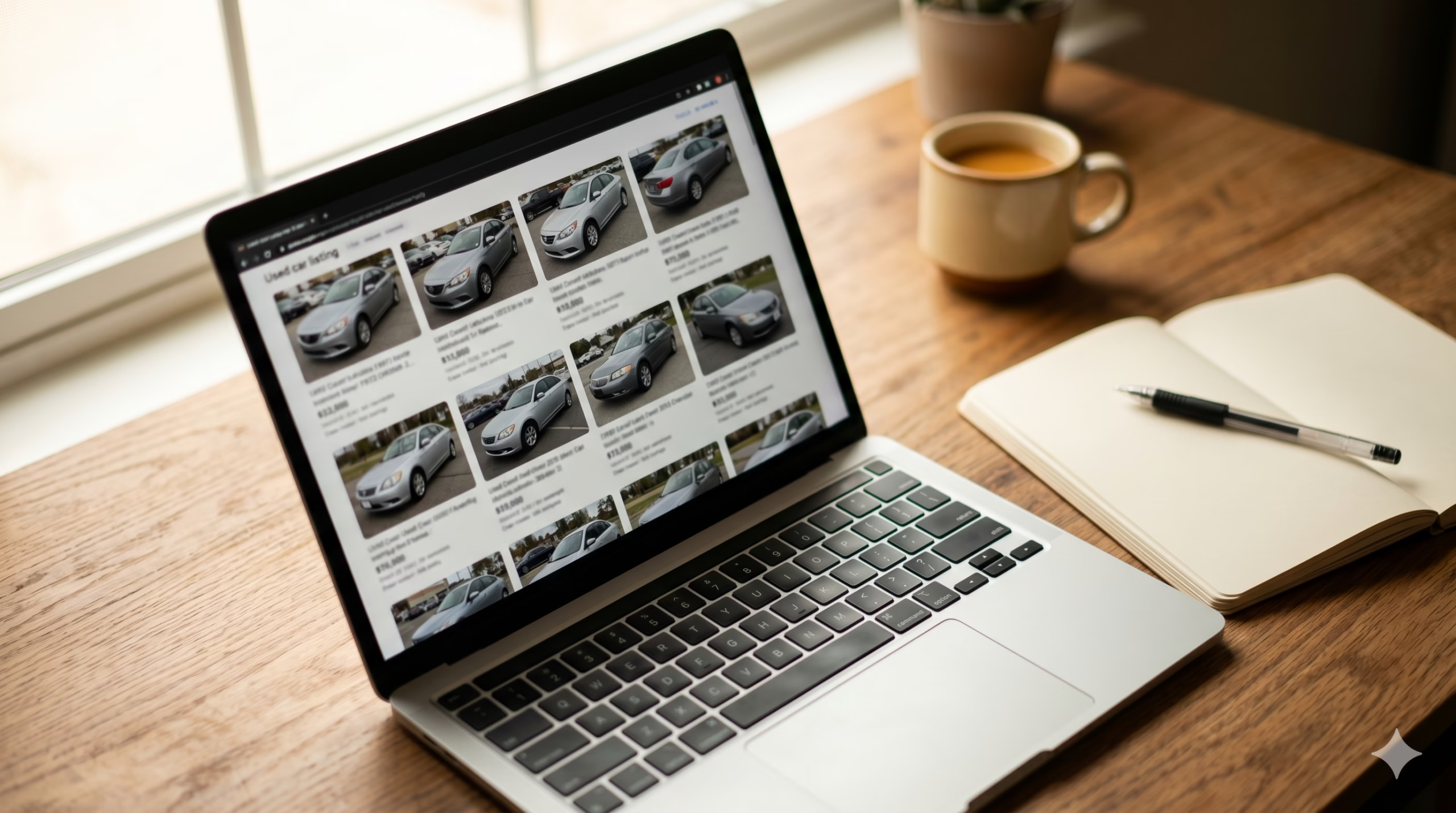
Buying from a seller in another state — through Carvana, Bring a Trailer, Cars & Bids, an enthusiast forum, or a private-party listing — means you can't do any of the walkaround checks from Episodes 1–3 yourself. You're working from photos. And photos hide all five paint tells from Episode 2, most of the panel issues from Episode 1, and every structural sign from Episode 3.
The fix: hire a body shop near the seller to do the PPI before you commit funds or arrange transport. Most reputable shops will do a PPI for an out-of-state buyer and email the report with photos. You spend $200, you find out exactly what you're buying, and you've established a relationship with a shop that can do any needed warranty-period inspection if you decide to proceed.
If you can't be there yourself, send someone in your place who knows what to look for.
You spotted any sign from Episodes 1, 2, or 3.
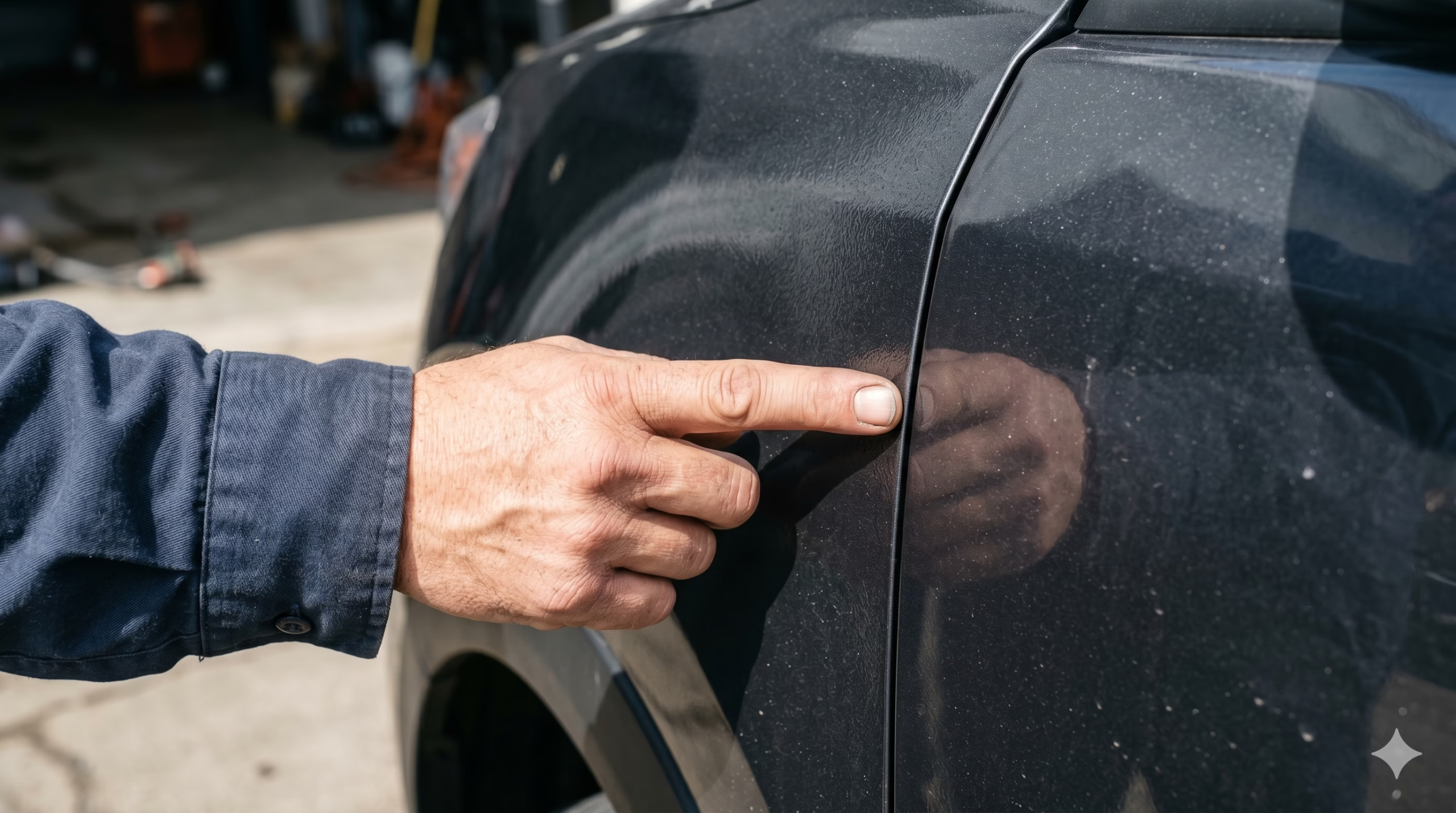
If your walkaround turned up a paint texture difference, a bolt-head with re-painted hex, a faintly bent panel gap, overspray on a weatherstrip, a wrinkled strut tower, or any single one of the signs the prior three episodes covered — you're already past the "should I get a PPI" question. The single sign is the signal. You don't need to be sure it's a deal-breaker. You need to know whether it's cosmetic or structural, and what the discount should be.
At this point the inspection isn't optional — it's how you turn the sign you found into a number you can negotiate. A documented finding from a body shop is a much stronger negotiation tool than "I noticed some paint looked off."
One sign is enough to justify the spend. Two is a directive.
What a real pre-purchase inspection includes.
Not every shop's "PPI" is built the same. Before booking, confirm the inspection includes these six items — and that you'll get a written report with photos, not just a verbal "looks fine."
- 01
Full visual walkaround
The 5 signs from Episode 1, plus a panel-by-panel check for damage and disclosure-worthy wear.
- 02
Paint thickness measurements
A gauge reading at every panel, recorded in mils. Factory typically 4–7; refinished typically 8–15+.
- 03
On-the-lift structural check
The 5 structural locations from Episode 3 — strut towers, frame rails, pinch welds, core support, trunk floor — inspected from underneath.
- 04
Basic mechanical observation
Visible fluid leaks, brake wear, tire condition and wear pattern, suspension component condition. (A full mechanical inspection is a separate service we'll refer out if needed.)
- 05
Photo documentation
10–30 photos of findings, both healthy areas and any concerns. Photos turn opinions into evidence.
- 06
Written report & verbal walkthrough
A summary report emailed to you, plus a phone call or in-person walkthrough explaining what we found and what it means for the deal.
Don't buy guesswork. Buy a report.
A Rippers pre-purchase inspection is about an hour, on a lift, in West Sacramento. You get all six items above, a written report by email, and a phone call to walk through what we found. $150–$250 depending on vehicle. Bring the car yourself, or send the seller to us. We'll handle it directly with them if needed.
Book a Pre-Purchase Inspection or call (916) 372-5353The Complete Series.
- Episode 01
5 Signs Your "Like New" Used Car Was in a Crash
Read Episode 1 → - Episode 02
What Mismatched Paint Really Tells You
Read Episode 2 → - Episode 03
The Frame Tells the Truth
Read Episode 3 → - Episode 04 · You are here
When to Pay for a Pre-Purchase Inspection
Quick answers, in one sentence each.
How much does a pre-purchase inspection cost in Sacramento?
Most body-shop PPIs in the Sacramento area run $150 to $250, depending on the vehicle and depth of inspection. Inspections that include extensive mechanical work (engine compression, transmission scan, full diagnostic) typically cost more and are usually performed by a separate mechanic. Body-focused PPIs at a collision repair shop focus on paint, panels, and structural integrity.
How long does a pre-purchase inspection take?
A thorough body-shop PPI takes about one hour from drop-off to lift-down, with the written report typically delivered within 24 hours. Quicker "courtesy" inspections that take only 15 to 20 minutes are usually visual-only and don't include paint thickness measurements or on-the-lift structural checks — confirm what's included before booking.
What should be included in a pre-purchase inspection report?
A complete report should include a full visual walkaround, paint thickness measurements on every panel, an on-the-lift structural inspection, basic mechanical observation, photo documentation, and a written summary with findings. Verbal "it looks fine" feedback without documentation isn't a real PPI — request the written report before booking.
Can I bring any used car for a pre-purchase inspection?
Yes — any used car the seller will let you take for an hour can be inspected. Most shops, including Rippers, can accommodate any make and model: sedans, SUVs, trucks, sports cars, EVs, hybrids. If a seller refuses to let you take the car for an inspection, that refusal is itself important information, and you should usually walk away.
Will the seller let me take the car for an inspection?
Reputable sellers — dealers and private parties alike — almost always agree to a pre-purchase inspection, often with a small holding deposit or a copy of your ID. The standard arrangement is that you (the buyer) drive the car directly to the inspection shop and back. A seller who refuses, makes excuses, or insists on accompanying you for the entire visit is signaling something worth paying attention to.
CA BAR Automotive Repair Dealer Reg. [ARD #294466]
This article concludes the Spotting a Bad Repair series. Pricing reflects typical Sacramento-area body-shop PPI rates and is subject to change based on vehicle and inspection depth. This article is educational and does not constitute a safety determination on any specific vehicle. See the May 2026 newsletter for the rest of the series.