


The 20-Minute
Pre-Departure
Walkaround.
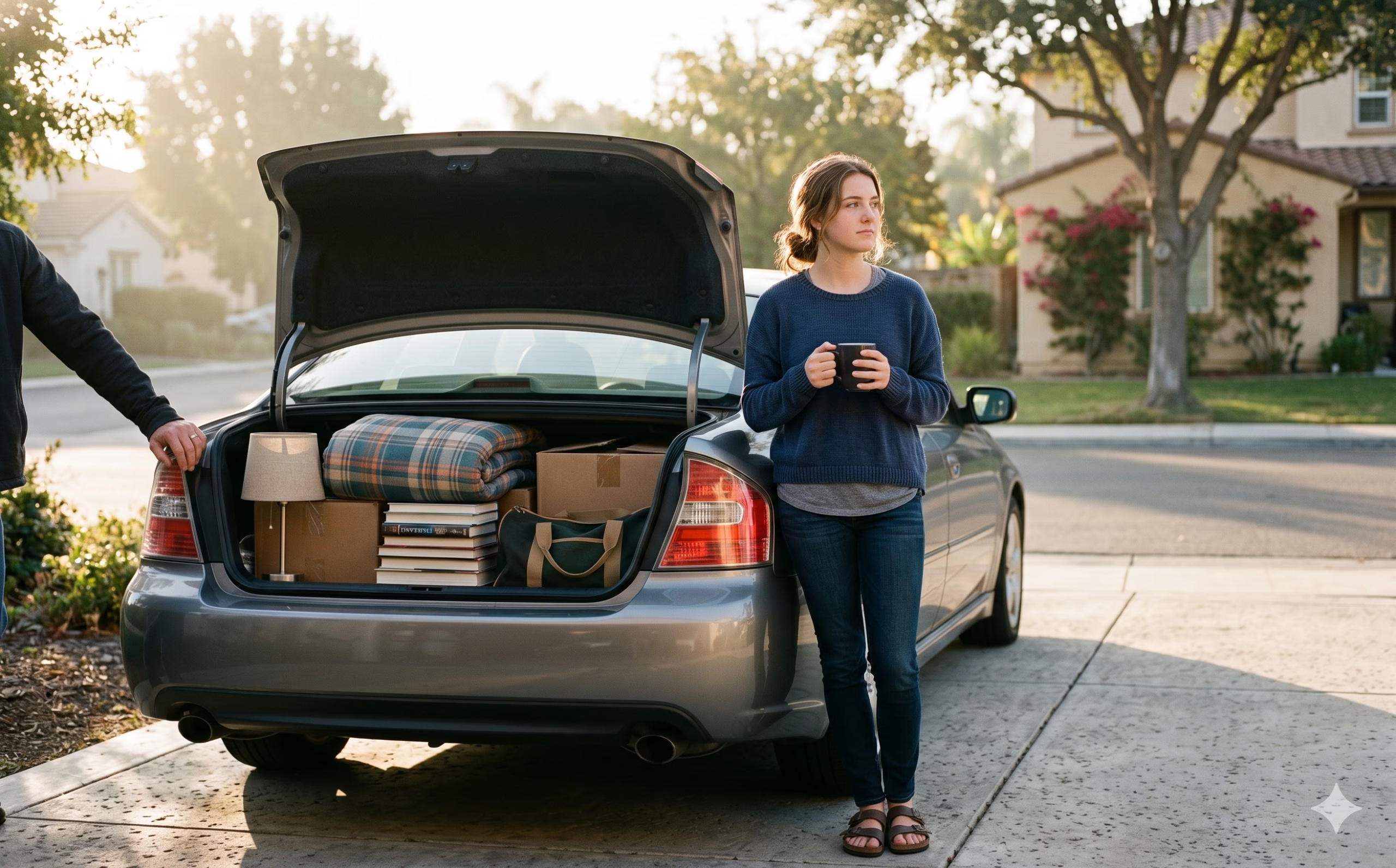
Twenty minutes between coffee and the highway. No tools. No lift. The owner's-side walkaround we'd do on our own car before a 500-mile day on I-80. Built for July 4 weekend.
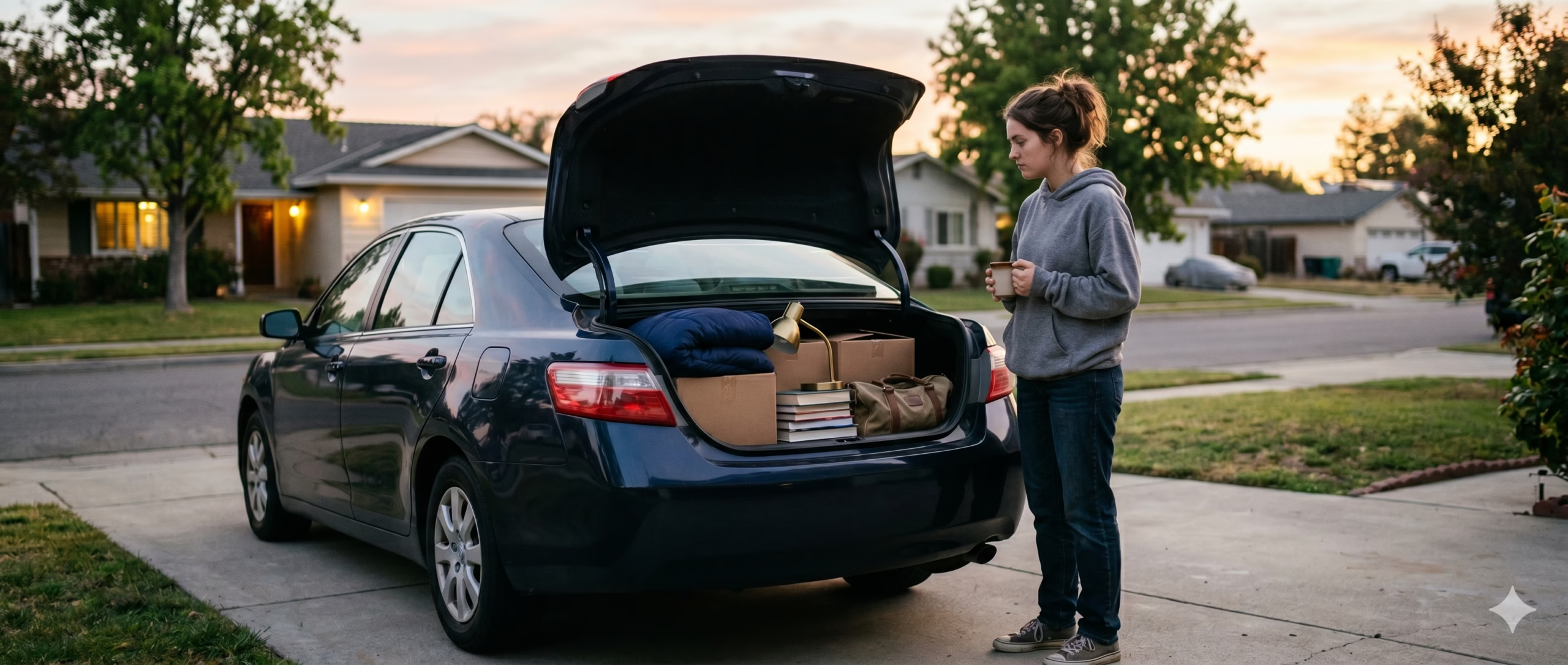
Most road-trip stories that start with "and then…" could have ended with "and that's why we checked the night before."
Long-drive failures almost always announce themselves on the driveway first. A tire that's low. A wiper that streaks. An A/C that takes a beat too long to get cold. A dash light that comes on right after the engine starts. Twenty minutes in the driveway catches roughly 90% of what could ruin the trip. And unlike the deeper pre-college checklist from earlier this month — which assumes you have a Saturday morning — this one is built for the actual morning of departure. Coffee. Walkaround. Highway.
Four segments. Five minutes each. No tools. No lift. Anyone can do it. The first three are stationary — outside, under the hood, inside. The last one happens on a short drive around the block. Then you're clear to go.
If you're working with more time and a college-bound car, last week's longer 12-point checklist covers more ground. Read the pre-college version ↗
The outside walkaround.
Coffee in your non-dominant hand. Phone in your pocket. Key fob ready. Walk the perimeter of the car in good light — these are the things that show themselves to anyone willing to look once.
- Tires — all four, plus the spare
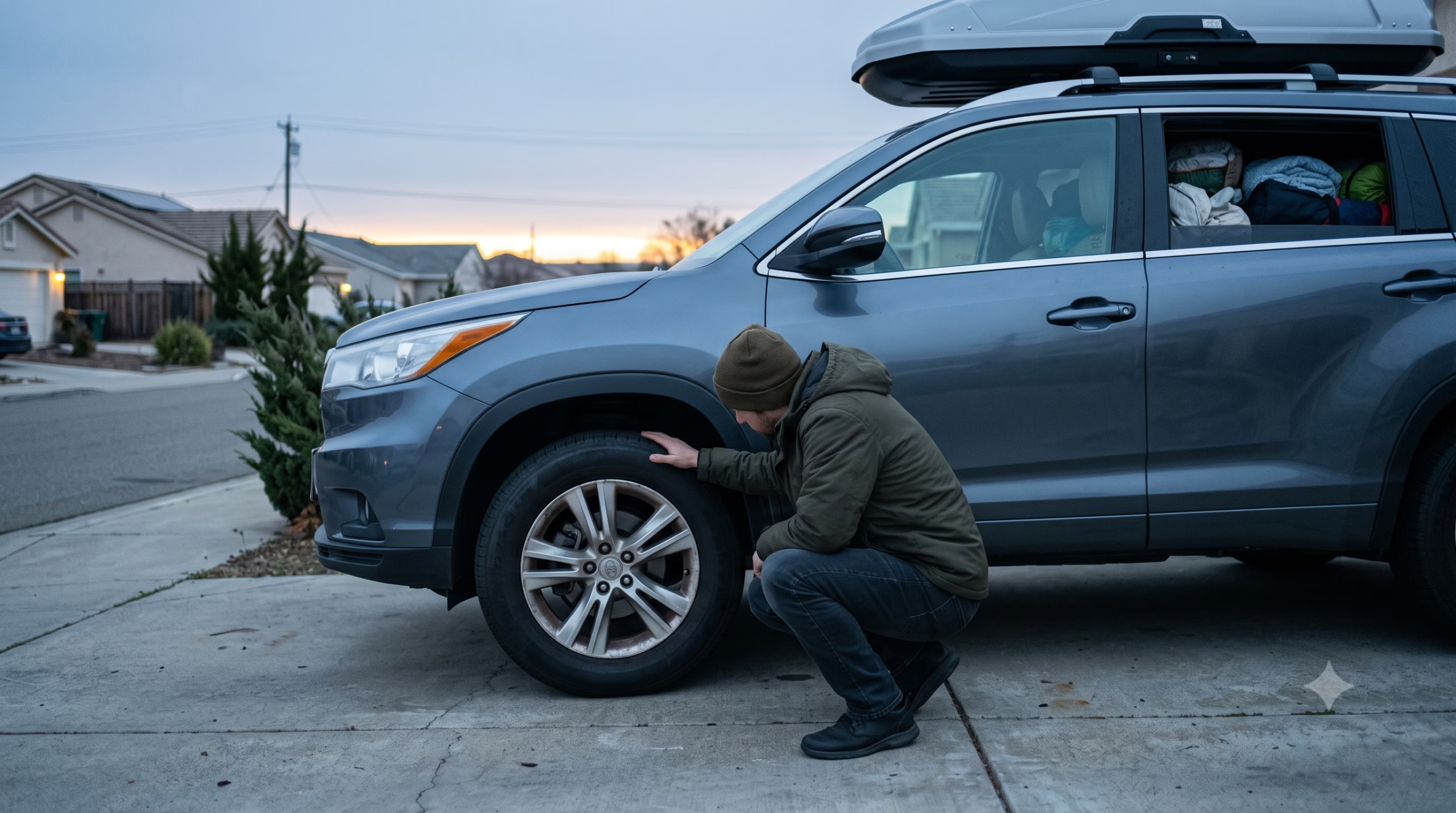
Walk the four tires. Each should look properly inflated (not visibly bulging or low). Run a hand along the sidewall feeling for cuts or bubbles. If you have time, drop the spare tire cover and verify the spare is also inflated — most road-trip stories that involve a spare also involve discovering it was flat.
- All exterior lights, including the plate
Sit in the driver's seat, run through headlights (low, high), brake lights, both turn signals, reverse lights, and the license plate light. Two minutes total. A burned-out plate light is a common pull-over reason out of state.
- Under the car — look for fresh fluid
After the car has been sitting overnight, fluid spots under it are easier to see. Anything fresh on the driveway concrete? Green is coolant, brown is oil, pink/red is transmission or power steering, clear is A/C condensation (the last one is normal). If you see something other than A/C condensation, address it before the trip.
- Roof rack, cargo box, or trailer hitch
If you're using any of these, check now: straps tight, lights working (for the trailer), nothing flapping. The first 30 miles of a road trip will reveal anything wrong — and the first 30 miles is the worst place to discover it.
- Mirrors, windshield, wipers
Both side mirrors clean. Windshield washer fluid works (give it a spray). Wiper blades pass a dry-windshield test without streaking or skipping. Old wipers are a 15-minute auto-parts-store fix and the only "tool" required is a screwdriver.
Pop the hood. Five things.
Cold engine. Level ground. Hood propped. No tools required. These are the basics that fail first under sustained highway load — and the ones designed to be checked by the owner without help.
- Engine oil — level & color
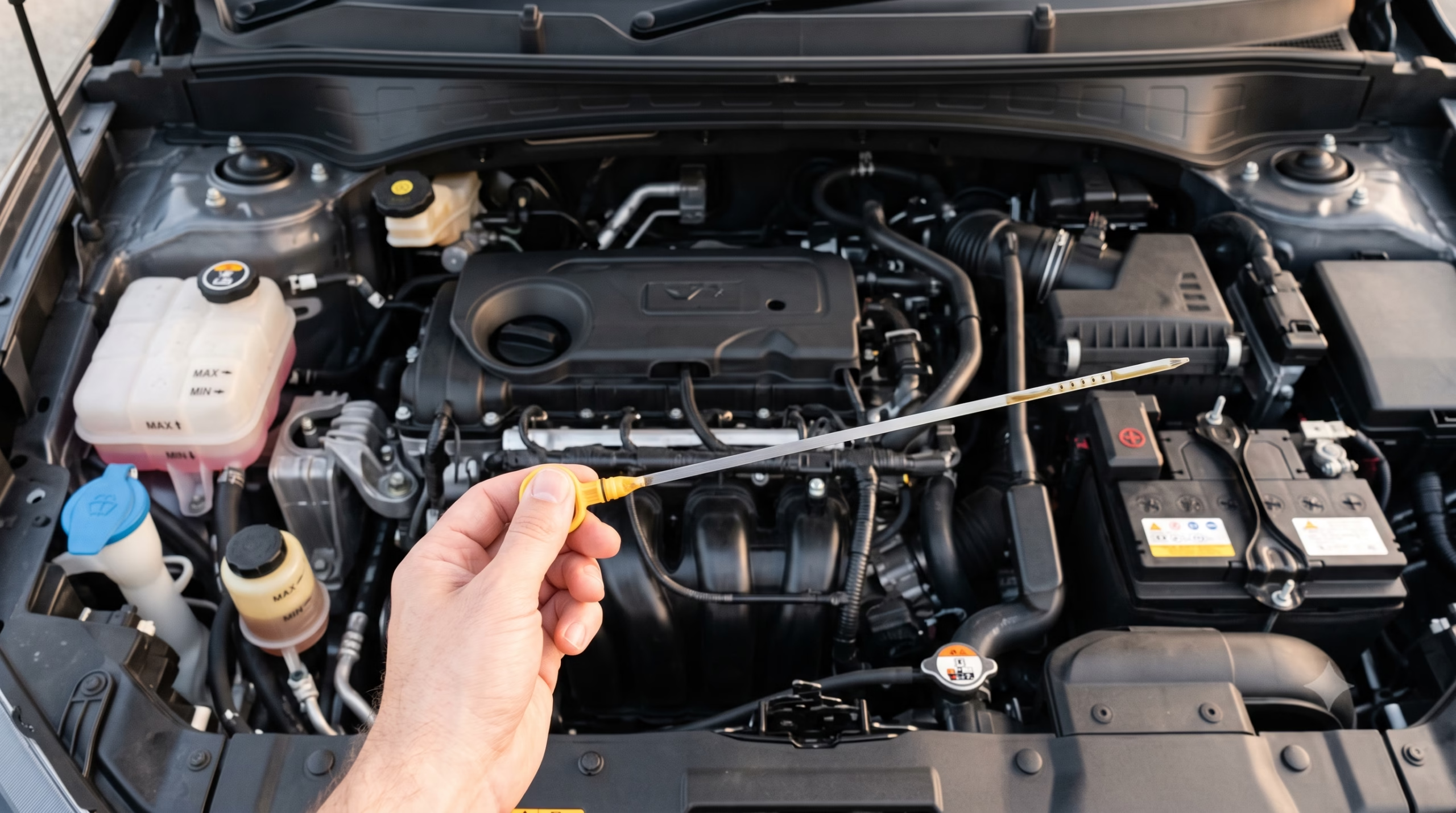
Pull dipstick, wipe, reinsert, pull again. Oil should sit between the marks and look amber to brown. If it's at or below the low mark — top it off before the trip. Burnt-smelling, jet-black oil means schedule a change at the next stop.
- Coolant — overflow reservoir level
Look at the translucent overflow tank. Fluid between MIN and MAX. Clear, not rusty. Don't open the radiator cap. If coolant is low, top up the overflow tank to the MAX line — never with cold water on a hot engine.
- Washer fluid — top it up
Highway driving uses an absurd amount of washer fluid — bugs, dust, the truck in front. Refill the reservoir before you leave. A $4 jug at the gas station now saves a $7 stop two states later.
- Battery — terminals & tie-down
Quick look at the battery. Are the terminals clean (no crusty white-blue corrosion)? Is the battery secured in its tray (not loose)? Loose batteries can short on rough roads. Corroded terminals can prevent a hot-engine restart at a rest stop.
- Belts, hoses, anything obviously wrong
Eyeball the visible belts and hoses. Glazed, cracked, or fraying belts are 5-minute warning signs. Bulging hoses are a 60-second warning sign. If something looks wrong, this is the time to delay an hour and have it checked — not the time to roll the dice on five highway hours.
If a check-engine light came on within the last week, take 30 minutes to swing by a parts store before the trip — most run codes free, and code-readers under $40 are an excellent road-trip purchase if you don't own one.
The sit-down. Cabin, gear, paperwork.
Sit in the driver's seat. Buckle in. Now check the things that only matter once you're moving — seating position, mirrors, the kit in the back, and the paperwork in the glove box.
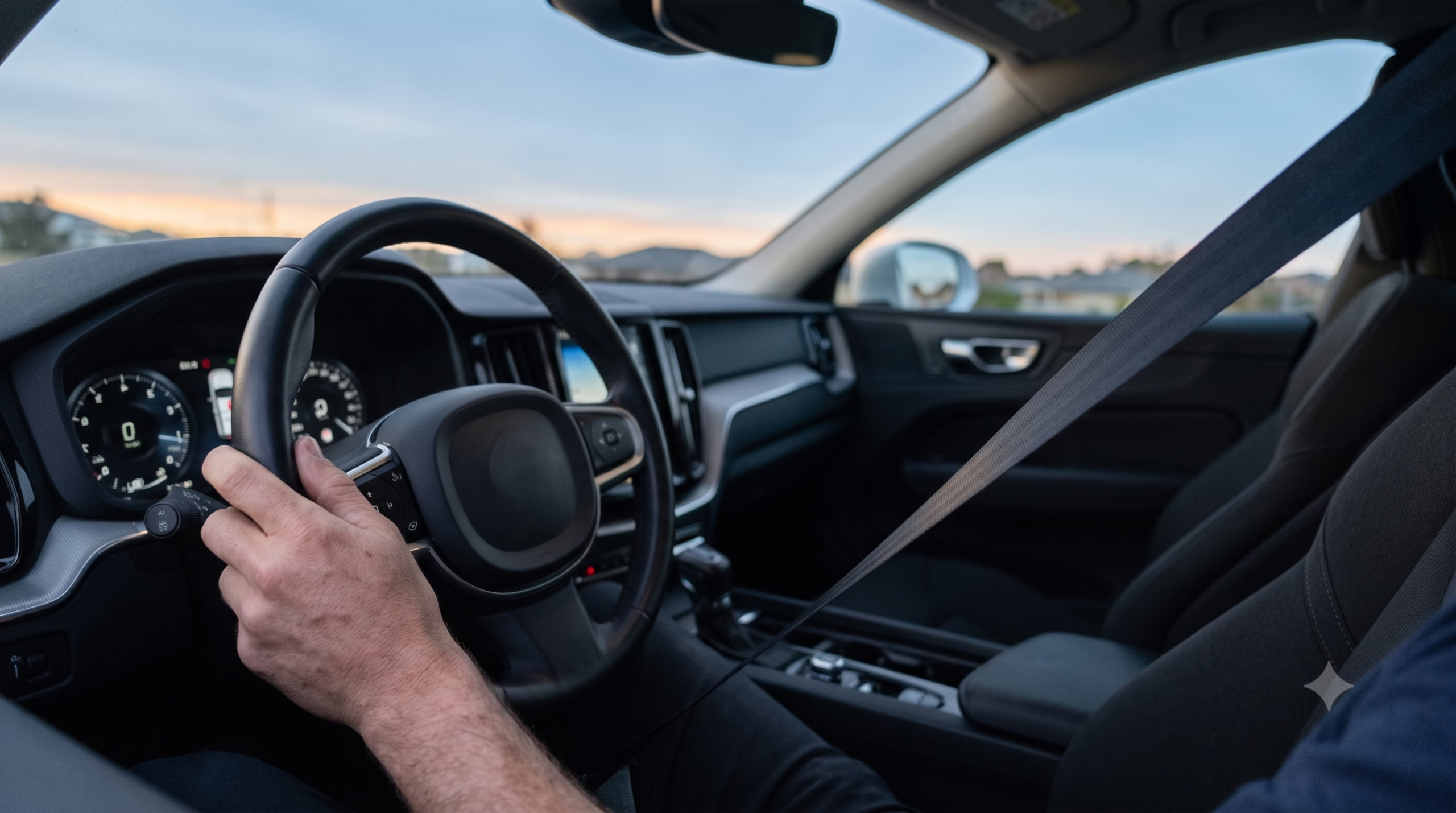
- Seat, wheel, mirrors — set for the long haul
Adjust now, not 80 miles in. Seat back angle right for the back you're going to have in three hours. Steering wheel positioned for relaxed forearms. Mirrors — both side and rear — set so you don't have to think about them.
- Seatbelts all the way around
Click every seatbelt in the car, including the empty seats. Listen for the latch. Tug to confirm it locks. Belts that have been ignored for years have a way of being noticed for the first time at a roadside check 600 miles from home.
- Phone charger, music, navigation, road comfort
Phone charger working in the car. Maps loaded and offline maps cached for your route. Music or audiobook ready. Sunglasses, water bottle, snack within reach of the driver. Driving while reaching for stuff is the most common minor-distraction crash cause — set up for arm's reach now.
- The emergency kit
Confirm what's in the trunk or rear cargo. Jumper cables. A flashlight that turns on. A first-aid kit. A jug of water (for you AND the car). A blanket if you're heading anywhere with cold-night potential. Nothing fancy — just the kit you'd want at 9 PM on the side of US-50.
- Registration & insurance, both current
Glove box. Current registration card matches the sticker on the plate. Current insurance card (paper or printed digital) reflects the current policy. Notify your insurance carrier if the trip is more than a week or out of country — most policies are fine, but it's a five-minute call worth making.
The short drive. Five minutes around the block.
These five things only show themselves when the car is moving. Drive a quiet five-minute loop — a couple of stop signs, one short stretch at 35 mph, and a return to the driveway. Listen, feel, watch the dash.
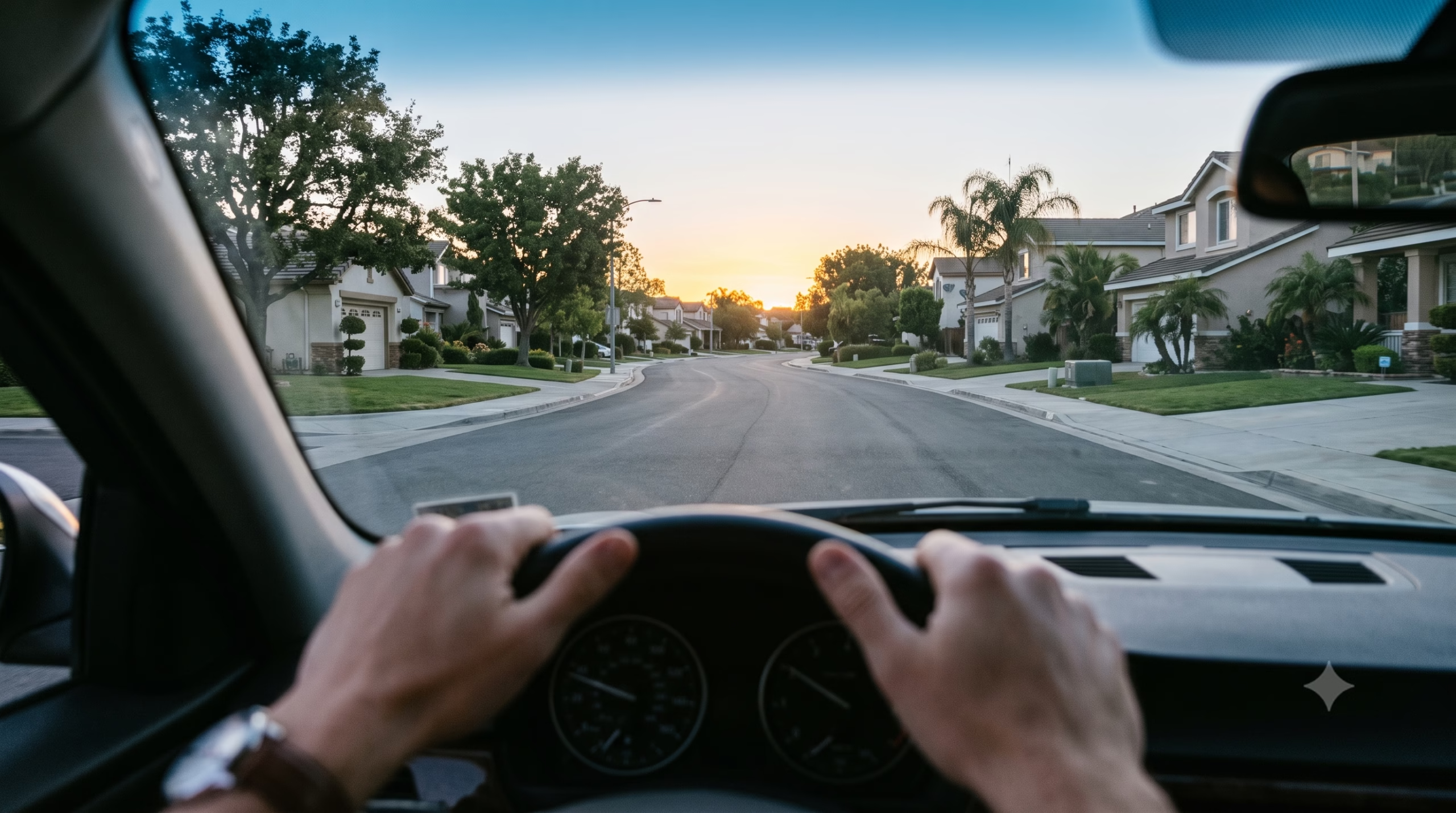
- Brakes — pedal feel & stopping behavior
The pedal should feel firm — not spongy, not sinking. Stops at a stop sign should be smooth. No pulling to one side. No grinding or persistent squeal. Engage the parking brake on a slight slope to confirm it still holds.
- A/C — actually cold within 2 minutes
Max cold, max fan, recirculate. Hand to vent. Within two or three minutes you should feel cold air — not "less hot" air. Sacramento to anywhere east means crossing some seriously hot ground in July. Get this sorted today, not while merging onto I-80 in 100°F.
- Steering — tracks straight with relaxed hands
On a quiet, level, straight stretch of road, briefly relax your grip on the wheel and see if the car drifts. A slight drift to the right is often a road-crown effect (most roads are crowned for drainage); a pronounced drift either direction can be alignment. Don't take your hands off the wheel on traffic-heavy roads — find a quiet stretch.
- Dashboard — any warning lights at all?
After about a minute of driving, every dash light should be off except the lights you've intentionally engaged (parking brake, hazards, high beams). If anything else is illuminated — check engine, ABS, airbag, tire pressure — find out what it means before leaving on a long trip.
- Any new noise that wasn't there before
You know your car better than anyone. A new tick, click, rattle, whir, or whistle is worth thirty seconds of curiosity. Some are nothing. Some are the warning before a real failure. The driveway is the best place to figure out which.
If you got through all four segments without finding something, you're done. Twenty minutes. Coffee's still warm. Pull back into the driveway, load the family, and go.
What to do if the walkaround turns up something.
Most findings sort into three buckets, and each has a different right answer:
1. Fix it now (most common)
Low tire? Top it up at the gas station on the way out — most have free or cheap air. Burned-out bulb? Auto parts store, 15-minute swap. Streaky wipers? Same store, two minutes. Low washer fluid? Three-dollar jug. None of these should delay the trip by more than an hour.
2. Delay one day, fix it right
Something that could be a real issue but isn't catastrophic — a check-engine code you don't recognize, a soft brake pedal, a coolant level that's mysteriously low, an A/C that's not getting cold. Push the trip 24 hours, take it to a shop that morning, and leave the next day with the answer in hand. One day late beats five days stranded.
3. Stop the trip, fix it before going anywhere
Brake pedal sinking to the floor. Steam from the engine bay. Fresh oil pooling under the car. A new rattle that sounds metallic and rhythmic with speed. Visible damage to suspension components. None of these are road-trip-able problems. They're driveway-and-tow problems. Cancel the trip, get the car to a shop, and reschedule.
If you're not sure which bucket a finding belongs in — that's exactly what the Send-Off Safety Check below is for. Thirty minutes. Forty-nine dollars. Honest answer.
Thirty minutes. Forty-nine dollars. Honest answer.
The Send-Off Safety Check at Rippers is the pro version of the walkaround above — same general scope, but on a lift, with a paint depth gauge, a brake pad measurement tool, and a battery load tester. Written summary in hand when you leave. Available throughout the summer for road-trip families and college-bound students.
Book a Send-Off Safety Check or call (916) 372-5353Today is the final day of the Summer Send-Off Bundle at $549 (save $210 vs. à la carte). Five services in one visit — paint sealant + UV protection, headlight restoration, bumper scuff repair, interior detail, hand wash & tire dressing. Book by 5 PM to lock in June pricing.
All four weekly guides.
June's complete Send-Off Issue, in order — pre-college, Father's Day, paint protection, and now this finale. Bookmark the page for next summer; the playbook doesn't change much year to year.
- Jun 9
Sending Them Off Safely: A Pre-College Car Checklist
Read Week 1 → - Jun 16
This Father's Day, Treat Dad's Truck Right
Read Week 2 → - Jun 23
What Sacramento Summer Heat Does to Your Paint
Read Week 3 → - Jun 30 · You are here
The 20-Minute Pre-Departure Walkaround
Quick answers, in one sentence each.
What should I check on my car before a road trip?
A complete pre-trip walkaround covers four areas: outside (tires, lights, leaks, roof rack), under the hood (oil, coolant, washer fluid, battery, belts), inside (seat position, seatbelts, phone setup, emergency kit, paperwork), and a short test drive (brakes, A/C, steering, warning lights, new noises). The full check takes about 20 minutes with no tools required and catches roughly 90% of common road-trip failures.
How long does a pre-trip inspection take?
A thorough owner-side pre-trip walkaround takes about 20 minutes; a professional Send-Off Safety Check takes 30 minutes including a written summary. The professional version covers items the owner can't easily verify — brake pad thickness, battery load capacity, alignment — and produces documentation you can keep with you.
How often should I check tire pressure on a road trip?
Check tire pressure before departure when tires are cold, and then again every 500 miles or every fuel stop during the trip. Tire pressure changes roughly 1 PSI per 10°F of temperature change, so summer driving on hot asphalt naturally raises tire pressure mid-day. The cold-morning reading is the one that matters for safety; never bleed air from a tire that's hot from driving.
What should I bring on a long road trip?
The essentials: jumper cables or a portable jump-pack, a flashlight, a first-aid kit, a gallon of water, a blanket, a phone charger, a paper map of the general route as backup, and current registration plus insurance card in the glove box. Nothing fancy — just the kit you'd want at 9 PM on the side of a quiet highway.
Should I get my car serviced before a long road trip?
If a scheduled service is due within the next 5,000 miles or 3 months, doing it before a long trip is the cheaper path — both in price and in stress. Routine items like oil changes, tire rotations, and brake inspections are inexpensive to schedule in advance and meaningfully reduce the chance of a roadside surprise. The Rippers Send-Off Safety Check ($49, 30 minutes) is a faster alternative when a full service isn't due.
CA BAR Automotive Repair Dealer Reg. ARD #294466
This article concludes The Send-Off Issue, June 2026. The pre-trip walkaround described here reflects general visual inspection practices and is not a substitute for professional vehicle inspection or safety determination on any specific vehicle. See the rest of the series and our June 2026 newsletter for more.